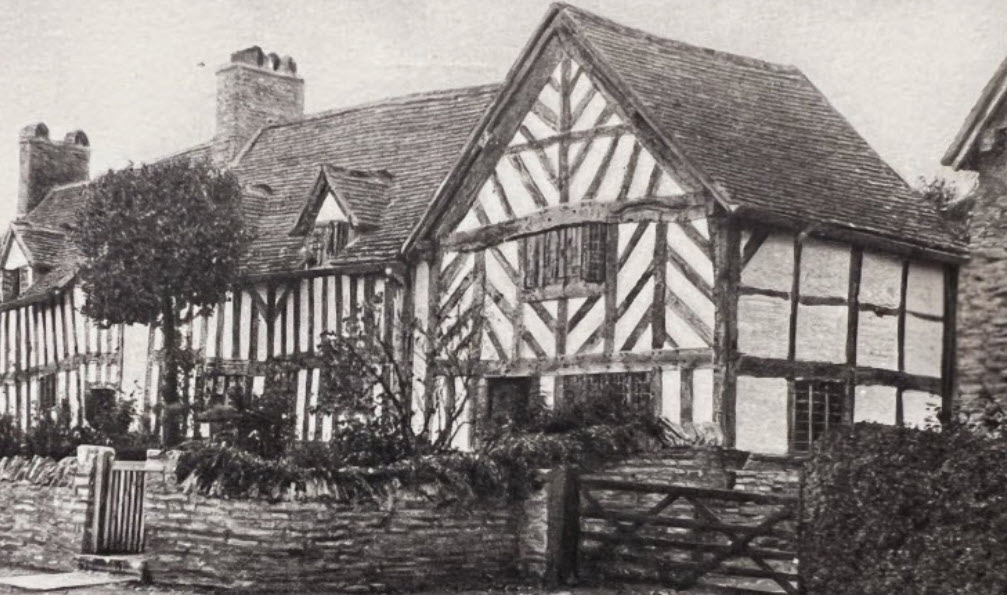
Wilmcote is a small Warwickshire village with a big story, known above all as the home of Mary Arden, the mother of William Shakespeare, and as an early centre of the Anglo‑Catholic Oxford Movement.
Origins and early history
Wilmcote lies about three miles north of Stratford‑upon‑Avon, in gently rolling countryside that has long supported small farms and quarrying. It appears in the Domesday Book as part of the lands of Osbert Fitzrichard, a Norman landowner who served as a royal judge under William II. In medieval records the settlement is sometimes described as a hamlet of the larger parish of Aston Cantlow, reflecting its status as a small outlying community rather than a separate parish in its own right.
By 1316 Wilmcote is explicitly called “a hamlet of Aston Cantlow”, and manorial rights over Great and Little Wilmcote passed through several noble families over the fourteenth century. The Black Death had a marked impact here, as in much of England, with members of the local lordly family dying in the epidemic of 1348–49 and its aftermath. A chapel at Wilmcote is first mentioned in 1228, when the right to appoint its priest (the advowson) was disputed between William de Wilmcote and the Archdeacon of Gloucester, showing that spiritual provision for villagers existed from an early date even though the settlement lacked full parish status.
Mary Arden and the Tudor period
Wilmcote’s best‑known historical figure is Mary Arden, born in the village around 1540 into a prosperous farming family. She later married John Shakespeare, a glover and dealer in farm produce from Stratford‑upon‑Avon, and became the mother of William Shakespeare, whose life has made this corner of rural Warwickshire famous across the world. The house associated with Mary Arden and her family, at the edge of the village, was long run by the Shakespeare Birthplace Trust as “Mary Arden’s Farm”, interpreting Tudor rural life and farming; although now closed to the public, it still stands as a reminder of Wilmcote’s Tudor heritage.
In 1561 an estate described as the manor of Great Wilmcote, including Mary Arden’s house and land in nearby Shelfield, was granted to Adam Palmer of Aston Cantlow and George Gibbs of Wilmcote. This transfer reflects the patchwork of local landownership that shaped village life, with yeoman and gentleman farmers managing mixed agriculture on the good Warwickshire soils. Despite its later industrial associations, Wilmcote in Shakespeare’s day would have been a quiet agricultural community of timber‑framed cottages, small fields and open hedged lanes, very much part of the world that formed the young playwright’s imagination.
Quarries, canal and railway
Beneath Wilmcote’s fields lies another source of wealth: a high‑quality limestone that defined the village’s economy from the eighteenth century onwards. As demand for building stone and lime increased, quarrying expanded and Wilmcote stone became widely known for its durability and suitability for paving. One of its most notable uses was as flooring for the rebuilt Houses of Parliament in the nineteenth century, a remarkable claim to fame for a modest rural community.
The opening of the Stratford‑upon‑Avon Canal in 1816 transformed the village’s connectivity, with the route deliberately taken through Wilmcote to reach its quarries. Stone was moved by short tramways from the pits down to canal wharves, traces of which can still just be made out in the landscape, along with disused lime kilns where limestone was burnt to produce cement and agricultural lime. Later in the nineteenth century the railway arrived, with the first Wilmcote station opening in 1860 beside the canal, later replaced by the present station when the line was doubled in 1908; these transport links tied the village more closely to Stratford and the wider region.
The quarries eventually closed in the early twentieth century, leaving behind a landscape dotted with filled‑in workings, a larger former quarry now managed as a nature reserve, and rows of quarry workers’ cottages built from the village’s own warm‑coloured stone. One pub, known historically as the Masons’ Arms, spoke directly to this stone‑working heritage and to the social world of the masons, carters and labourers who once formed a large part of the local workforce.
St Andrew’s Church and village faith
Although Wilmcote had a medieval chapel, it lacked a full parish church for many centuries and remained under the ecclesiastical jurisdiction of Aston Cantlow. This changed dramatically in the early nineteenth century, when the Anglo‑Catholic Oxford Movement chose Wilmcote as the site for one of its earliest church‑building schemes. In the 1840s the Revd Francis Knottesford Fortescue, Lord of the Manor of Alveston, and his newly ordained son Edward selected the village for the erection of a new Chapel of St Andrew to serve the growing working‑class population drawn by the quarries.
Designed by architect Harvey Eginton, St Andrew’s was consecrated on St Martin’s Day, 11 November 1841, and Edward Fortescue became its first priest. According to village tradition, some of the early leaders of the Oxford Movement visited and worshipped at Wilmcote, giving this modest building a national profile among supporters of the Anglo‑Catholic revival. Today the church is recognised locally as of particular historic interest, often described as the first church built by the Anglo‑Catholic revival, and stands as a stone monument to nineteenth‑century religious enthusiasm in the parish.
Behind the present parish church lies a longer story of worship. The medieval chapel’s advowson passed to the Gild of the Holy Cross in Stratford in 1481, and its chaplains were instituted and inducted by the vicars of Stratford, tying Wilmcote’s religious life closely to that of the nearby market town. Taken together, the medieval chapel and Victorian church illustrate a continuous Christian presence in the village, adapting to demographic and devotional changes over eight centuries.
Village life and people today
In 2004 Wilmcote became a separate civil parish in its own right, and by the 2011 Census it had a population of around 1,200. The village lies in “the heart of Shakespeare Country”, just three miles from Stratford, and combines a strong sense of local identity with the attractions and pressures of being in a well‑visited tourist area. Modern Wilmcote retains many amenities associated with a lively rural community, including a primary school, village hall, village club, shop, pub, sport and social club, and small hotel.
Community life centres on these shared spaces and on organised activities, from events in the village hall and youth centre to social gatherings at the church and club. The Wilmcote Village Hall and Youth Centre charity exists to provide buildings, facilities and open space for recreation, benefiting children, young people, older residents and the wider public. The parish council maintains a village website that promotes local news and stresses Wilmcote’s unique historic significance, its canal walks into Stratford and its continuing role as a distinct parish amid open Warwickshire countryside.
Although Mary Arden’s Farm is no longer open to visitors, the story of Shakespeare’s mother remains part of the village’s identity, drawing interest from literary tourists and local historians alike. The Stratford Canal still passes quietly through the parish, its towpath offering a pleasant three‑mile walk into Stratford and reminding walkers that Wilmcote’s history is as much about movement and connection as it is about rootedness. Rows of former quarrymen’s cottages, the stone‑built church of St Andrew, and the pattern of lanes and fields together create a landscape where centuries of work, worship and everyday life can still be traced in the fabric of the place.