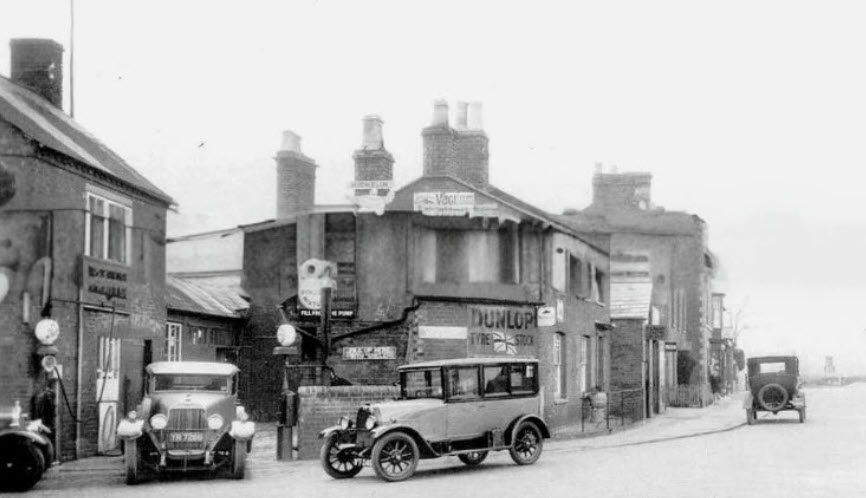
Wellesbourne is a historic Warwickshire village whose story weaves together royal power, agricultural life, social reform, and a long‑standing parish church at its heart.
This article looks at its history, life, people, and church in around a thousand words.
Early history and royal connections
Human activity around Wellesbourne goes back at least to the Iron Age, with a probable 3,500‑year‑old settlement identified at nearby Walton during pipeline works. Roman occupation is also suggested in the Walton area, hinting that the fertile land along the River Dene has attracted settlers for millennia.
The name Wellesbourne appears in early forms such as Wallesburam and Waleborne, and the village is recorded in the Domesday Book of 1086 as part of the royal manor of Kineton. In the 9th century it was significant enough for Burgred, king of Mercia, to hold two meetings of the Mercian “parliament” here, and historians believe a royal palace once stood in the village at the centre of a royal estate.
One dramatic moment in its medieval story came in May 1140, when Wellesbourne was struck by a tornado, one of the earliest such events recorded in the British Isles; it damaged buildings and caused at least one death.
From twin villages to modern parish
For centuries Wellesbourne existed as two villages divided by the River Dene: Wellesbourne Hastings to the north and Wellesbourne Mountford to the south. The Hastings name entered local history in the early 14th century when Maud of Walton married Thomas Hastang, while Mountford derives from Peter de Montefort, whose family held land here in the 14th century.
Though close neighbours, Hastings and Mountford retained separate parish administrations until the mid‑20th century. In 1947 the two parishes were formally merged and are now regarded as a single village, though the older division still shapes local geography and memory. Because of this dual past, Wellesbourne today has two centres: Chestnut Square and the Precinct. Chestnut Square no longer hosts shops, but the old shopfronts remain visible in houses, while the Precinct developed into the main commercial heart.
The wider civil parish now includes Walton, and in 2014 its official name changed from Wellesbourne to Wellesbourne and Walton. By the 2021 census the parish population had reached 7,283, up from 5,849 in 2011, reflecting significant recent growth.
Landscape, work and village life
Wellesbourne sits in the heart of Warwickshire, on the banks of the River Dene, surrounded historically by open fields and later enclosed farmland. For much of its history, village life revolved around agriculture: yeoman farmers, often tenants of estates such as Walton Hall and Charlecote, worked the surrounding land, while the “labouring poor” lived in the village and provided the workforce.
By the 18th century the landscape was reshaped by enclosure. The Wellesbourne Enclosure Act of 1733–1734 redistributed common land among major local landowners, including Sir Charles Mordaunt of Walton Hall and the Lucy family of Charlecote. Part of this land, including what is now the allotment site, went to the vicar of St Peter’s Church; villagers continued to grow food there but now paid rent to the vicar, and by around 1838 the ground was formally recognised as allotments. Those allotments are among the oldest in the country and still serve local residents today.
From the medieval period through to the mid‑20th century the rhythm of life changed slowly, with village shops supplying everyday needs and crafts such as wheelwrights and blacksmiths supporting the farming community. In recent decades, Wellesbourne has evolved into a sizeable and more diverse settlement, with people commuting to nearby towns while still enjoying village amenities and markets.
Today, with a population of around 6,000–7,000 in the parish, Wellesbourne combines housing estates and historic streets, local shops, schools, medical services, pubs, and a famous airfield market that draws visitors from across the region. The village market has medieval roots, with trading activity in Wellesbourne documented since at least the 12th century.
People and social change
The people of Wellesbourne have long been shaped by farming, estate work, and local trades, but in the 19th century they also played a key role in national labour history. In 1872, Joseph Arch, a Wellesbourne agricultural worker and Methodist lay preacher, founded the National Agricultural Labourers’ Union in the village—the first trade union for farm workers in Britain.
This movement began in response to low wages and harsh conditions and quickly spread far beyond Warwickshire, making Wellesbourne a symbol of rural organisation and self‑help. The event used to be marked by an annual parade, and though union involvement later waned, the Wellesbourne Action Group still organises a commemorative walk from Barford to Wellesbourne each June along the Joseph Arch Way, ending at a plaque in the village bus shelter.
In the 20th and 21st centuries, new housing and improved transport links have drawn in a wider mix of residents. The population remains predominantly White British, but there is a growing presence of Eastern European and other communities, adding to the village’s cultural life while it retains a strong sense of local identity. Clubs, societies, schools and churches continue to knit together long‑standing families and newer arrivals.
St Peter’s Church and religious life
St Peter’s Church stands as one of Wellesbourne’s key historic landmarks and an enduring centre of worship. The present building has medieval origins, with parts dating back to the 12th or 13th century, and it is listed for its architectural and historic interest.
Over the centuries, St Peter’s has grown with the village. Medieval builders established the core structure; later generations altered and restored it as worship styles changed and congregations expanded. The church’s setting, with its calm churchyard, connects modern Wellesbourne to the lives and faith of earlier villagers whose families are buried there.
The parish’s link to landownership is visible in the story of the allotments: in the 18th and 19th centuries the vicar of St Peter’s held “the vicar’s part” of enclosed common land and received rents from villagers cultivating it. This arrangement both reflected the church’s local influence and provided a practical way for poorer residents to supplement their incomes and diets through home‑grown food.
In recent times St Peter’s has remained active, supporting regular worship, life‑events services, and community activities, and serving alongside other churches and chapels in the area. As Wellesbourne has expanded into a larger, busier settlement, the church has continued to offer a spiritual and social anchor, balancing tradition with the needs of a changing population.
Across more than a thousand years, Wellesbourne’s history—from Mercian parliaments and royal estates to agricultural unionism and modern village growth—has always turned around its land, its people, and the enduring presence of St Peter’s at its heart.