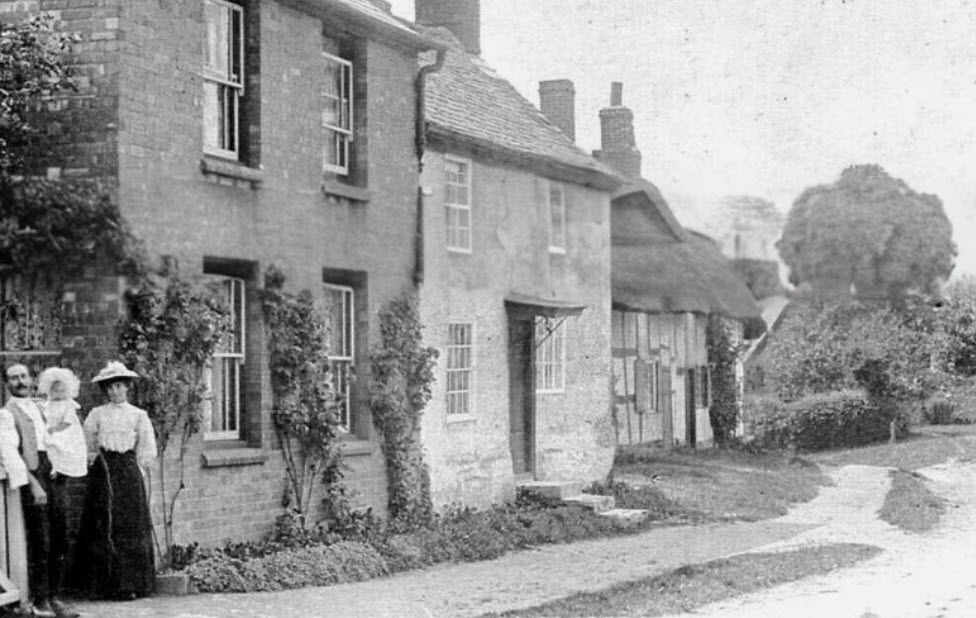
Welford-on-Avon is a riverside village with deep agricultural roots, a strong sense of community, and a parish church that has shaped its story for nearly a thousand years.
This article explores the history, people, and church of Welford-on-Avon in about a thousand words.
Early history and setting
Welford-on-Avon lies in a loop of the River Avon about four miles west-south-west of Stratford-upon-Avon, its core clustered around St Peter’s Church and a network of old lanes and timber-framed cottages. The village name reflects its riverside setting, and the settlement was important enough to be recorded in the Domesday Book, indicating Saxon origins long before the 11th century.
For centuries Welford’s life was shaped by the river crossing, fertile alluvial soils, and its position near the fluctuating border between Warwickshire and Gloucestershire. The surrounding landscape remained predominantly arable farmland and commercial horticulture, a pattern that still frames the village today.
From medieval manor to modern village
In medieval times Welford formed part of the estates of the Earl of Gloucester, who granted the village to Deerhurst Priory; the parish church was in Priory hands by 1291. Ecclesiastically and administratively this tied Welford to Gloucestershire for many centuries, even though its cultural and economic life linked closely to Stratford and the wider Avon valley.
The medieval village developed around the ford and church, with early stone buildings and timber-framed dwellings gradually lining the main route through the settlement. By the 18th century the basic road pattern recognisable today was in place, and later growth largely took the form of infill and ribbon development along this spine north and south of the historic core.
In 1801 the parish population stood at just over 500, reflecting a small, predominantly farming community. Through the 19th and 20th centuries the village grew steadily, helped by improved roads and nearby railway stations at Binton and Milcote, though these closed in the mid-20th century. In 1931 Welford transferred from Gloucestershire to Warwickshire, and since 1974 it has formed part of Stratford-on-Avon District, though the church remains in the Diocese of Gloucester—a reminder of those older ties.
Buildings, landmarks and village character
Welford-on-Avon is widely admired for its Tudor and later timber-framed cottages, many of them thatched, which survive in and around the conservation area designated in 1969. Some 65 listed and around 80 non-listed historic buildings fall within this protected area, preserving the village’s traditional streetscape and rural character.
One of Welford’s most distinctive features is its maypole, about 20 metres (65 feet) high and regarded as one of the tallest in England. Originally wooden, it was replaced with an aluminium pole after a lightning strike, and it is now a Grade II listed monument symbolising local continuity and celebration.
Victorian and early 20th-century community buildings also play a notable role in village life: the original village school was built in the Victorian period and hosted the first parish council meeting in 1894; the Memorial Hall followed in 1924; and an Allotments Trust was founded in 1940 to support local growers. A Wesleyan chapel, built in the late 18th century, and the present Methodist chapel testify to the strength of nonconformist worship alongside the parish church.
The people of Welford-on-Avon
Historically, Welford’s people lived and worked in a parish rooted in agriculture—arable farming, market gardening, and later commercial horticulture along the Avon. Farm labourers, smallholders, craftsmen, and tradespeople formed the backbone of the community, supplying nearby Stratford and other local markets.
By the time of the first national census in 1801, the population numbered 516, and by the later 19th century it had risen to around 600–650 across the Gloucestershire and Warwickshire portions of the parish, with about 150 houses recorded. In the 20th century Welford evolved into a more mixed community, with commuters, retirees, and professionals joining families whose roots span generations in the village. The 2011 census counted about 1,420 residents in the parish, reflecting this gradual, managed growth.
Today the village supports a primary school, shops, two public houses, a garage, an 18‑hole golf course, a private marina, and allotments—amenities that help sustain a vibrant local life. Numerous societies and clubs, from sports and history to scouts, brownies, painting and yoga, show the continued importance of voluntary effort and shared community identity. St Peter’s congregation, together with Messy Church families and a range of lay volunteers, plays a significant part in that life.
St Peter’s Church: architecture and history
St Peter’s Church stands slightly apart from the main road, down a narrow lane, its honey-coloured stone reflecting building traditions seen across the Gloucestershire border. The present Norman building, dating from the mid to late 12th century, replaced an earlier Saxon church on the same site recorded from 1059.
Architecturally, the church comprises a chancel with north vestry, nave, very narrow north and south aisles, a south porch, and a west tower. The nave and aisles retain striking late Norman work: low, wide arches—two on each side—spring from a single central column with scalloped capitals, giving the interior an unusually broad and intimate proportion. The aisles are more like passages than full bays, while the chancel, largely rebuilt and significantly enlarged around 1330–1340, extends to a similar length as the nave.
The tower embodies several building phases. Its earliest stage is 12th-century, with a second stage added in the early 13th century and a substantial heightening in the 15th century, probably to serve as a navigational landmark and beacon for the ford across the Avon. The lych gate is thought to be 15th century, adding to the sense of continuity in the churchyard. Inside, notable fittings include a 13th-century font bowl and an early 17th-century pulpit, reflecting changing liturgical practice over time.
The church was “restored” in the Victorian period under Sir George Gilbert Scott, a prominent church architect, and the tower was repaired after fire damage in 1884. Today St Peter’s is a Grade I listed building, seating about 120, and remains open daily from dawn to dusk for worshippers and visitors, especially those walking the Avon Valley Footpath.
Church and community today
Although situated in Warwickshire, St Peter’s belongs to the Diocese of Gloucester and is now part of the RiverVale group of parishes with neighbouring villages such as Long Marston, Weston-on-Avon, Lower Quinton, and Meon Vale. The worshipping community numbers around 120, with an additional 40 or so adults and children involved in Messy Church, which meets monthly and has been rebuilding after the disruptions of the Covid-19 pandemic.
Services range from traditional Sunday worship to more informal family-oriented events, and the church collaborates closely with “Stratford Churches Together” and other local partners. As in earlier centuries, St Peter’s marks the rhythms of village life—from baptisms, weddings, and funerals to harvest festivals, Remembrance, and seasonal celebrations—anchoring Welford’s identity in a place of prayer, memory, and community service.
Across more than eight hundred years, the story of Welford-on-Avon’s life, people, and church has been one of steady adaptation: from Domesday manor to conservation village, from medieval priory church to active rural parish, and from purely agricultural settlement to a thriving modern community that still treasures its historic heart