Warwick, in Warwickshire, is one of England’s most historic and picturesque county towns, with roots stretching back over a thousand years.
Its long history reflects broader national stories—from Anglo‑Saxon kingdom‑building and Norman conquest, through medieval warfare and Tudor religious change, to the growth of Georgian townscape and the rise of tourism in the modern era. Today Warwick is best known for its imposing castle and elegant riverside setting, but its story is equally about trade, local government, and the way a small town has evolved alongside its castle‑owning earls.
Early foundations and Saxon defences
The site of Warwick lies on a bend of the River Avon, where the river crossing and nearby sandstone outcrop created a naturally defensible position. Archaeological evidence suggests human activity in the area from the Neolithic period, and permanent settlement can be traced back to at least the 6th century. In 914, Æthelflæd, Lady of the Mercians and daughter of Alfred the Great, built a fortified burh (fortified settlement) on the hilltop to defend Mercia from Viking raids, making Warwick one of ten such strongholds across the region.
This Saxon burh was more than a fortress; it was a proto‑town with a market, a growing community, and royal interest. Warwick soon became the administrative centre of the new shire of Warwickshire, and by the early 10th century a royal mint was established there, underlining its importance in the Mercian economy. The Danes attacked and burned parts of Warwick in 1016, destroying a nunnery that stood on the site of St Nicholas Church, but the town’s central role in the region ensured it was rebuilt and continued to grow.
Norman castle and medieval town
After the Norman Conquest, William the Conqueror ordered the construction of a motte‑and‑bailey castle at Warwick in 1068, on or near the earlier Saxon fortifications. This wooden stronghold quickly became a key piece in the Norman network of controls over the Midlands, and within a generation it was rebuilt in stone as Warwick Castle grew in size and grandeur. The castle remained the seat of the earls of Warwick, a title created in 1088 for Henry de Beaumont, whose family and successors turned the fortress into one of England’s most powerful and symbolic castles.
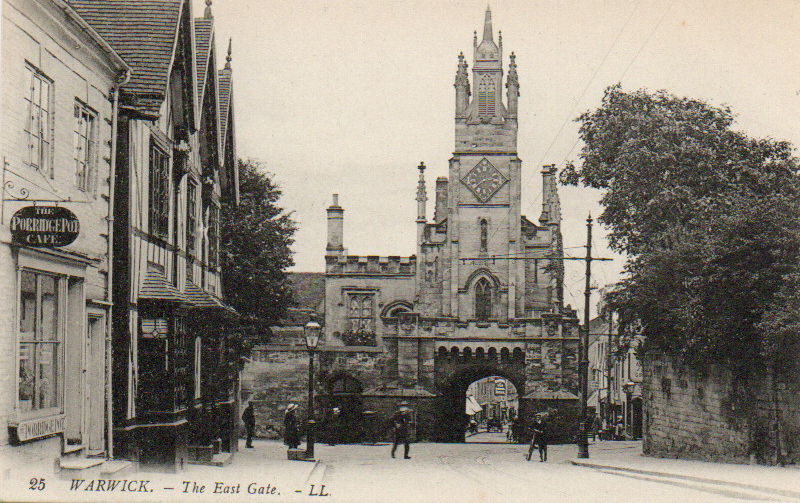
Medieval Warwick was dominated politically by its earls, particularly the Beauchamp family, who transformed the stone castle into a place of military strength, courtly display, and royal hospitality. The town itself was walled, with gates and defensive walls that reflected its status as a threatened frontier town in earlier centuries. Although Warwick was never one of England’s great commercial centres, its position as the county town and as the home of a powerful earl gave it a steady rather than spectacular prosperity, based on markets, local trade, and administrative functions.
Early modern change and the Civil War years
By the 15th and 16th centuries Warwick’s economy was shaped by local markets, crafts, and the presence of castle‑related service industries, but it was also affected by national upheavals. The dissolution of the monasteries under Henry VIII led to the closure of Warwick Priory, while the town’s governance was formalised: Henry VIII incorporated Warwick, granting it a corporation and the right to be governed by a mayor and council. This move helped consolidate the town’s identity as a self‑governing borough within the county.
During the English Civil War (1642–1651), Warwick and its castle were strategically important, lying between London and the Midlands. The earls’ allegiance to the Crown meant that the town and its fortress were contested: Parliamentarians eventually captured the castle in 1642 and slighted some of its defences, but the town itself escaped the worst of the destruction that befell other hotspots. In the later 17th century, the castle’s status shifted further from fortress to aristocratic residence, especially under Fulke Greville who turned it into a grand country house in the early 1600s.
The Great Fire and Georgian rebuilding
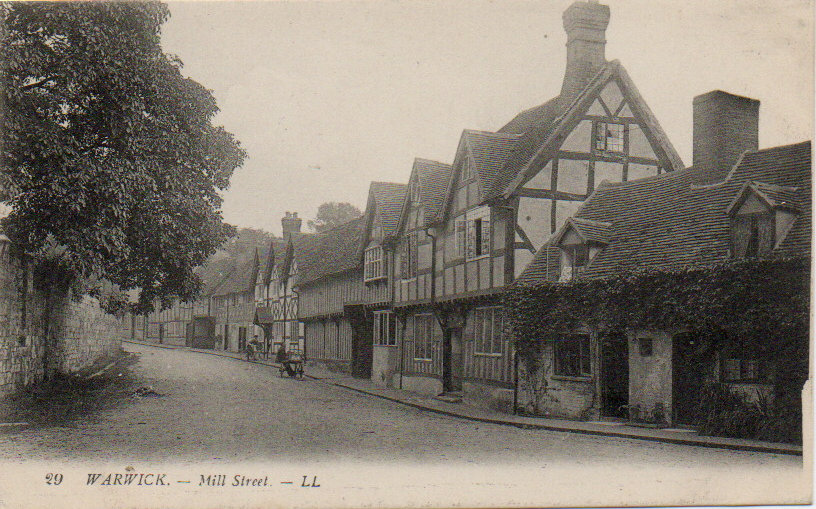
A defining moment in Warwick’s architectural history came in 1694, when the Great Fire destroyed much of the medieval town. Wooden buildings and thatched roofs proved highly vulnerable, and large parts of the central streets were reduced to ashes. In the aftermath, strict building regulations were introduced: thatched roofs were banned within the town, and new structures were to be built of brick and stone, giving Warwick much of the Georgian character it still displays today.
The rebuilding shaped the town’s present layout, with wider streets, more fire‑resistant materials, and a more planned appearance. Many of the elegant townhouses and shops in the central area date from the late 17th and 18th centuries, reflecting Warwick’s gradual growth as a genteel county town rather than an industrial hub. The focus of the town remained on the castle and the main market and church streets, creating a compact, walkable historic core that now attracts visitors from across the country.
Modern Warwick and its heritage
In the 19th and 20th centuries Warwick avoided the industrial sprawl that transformed nearby centres like Birmingham and Coventry, and instead grew as a small, residential, and market‑oriented town. Its position on the River Avon and its proximity to major transport routes—rail and later motorway—helped it develop into a comfortable commuter and tourist destination. The castle, long a private home, was gradually opened to the public over the 19th century and in the 20th became one of England’s most visited historic attractions, drawing millions of visitors who also explore the town’s narrow streets, churches, and riverside walks.
Today Warwick’s history is visible in its layered streetscape: traces of Saxon planning, medieval walls, Georgian façades, and Victorian tweaks all coexist with modern life. The town remains the county town of Warwickshire, a role it has held since the 10th century, and its museums, archives, and local‑history groups continue to record and interpret its past. For visitors and residents alike, Warwick offers a compact but rich journey through English history—from Alfred the Great’s daughter to the stonemasons of the Beauchamp earls, from the smoke of the 1694 fire to the carefully preserved streetscape of a classic English town.