Warmington: A Golden Ironstone Legacy in the Warwickshire Feldon
Nestled on the northern slopes of the dramatic Edge Hill ridge, Warmington is one of South Warwickshire’s most picturesque “ironstone” villages. Located approximately five miles northwest of Banbury, it sits within the Cotswolds Area of Outstanding Natural Beauty (AONB).
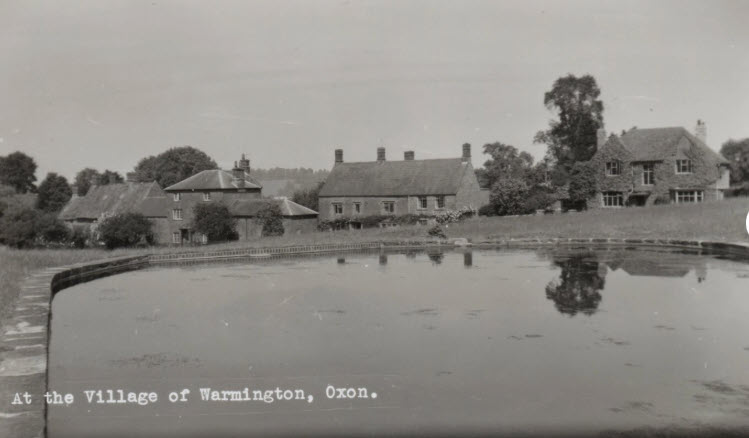
The village is a nucleated settlement defined by its golden-hued architecture, a large village green, and a deep-seated connection to the English Civil War.
A Landscape Carved in Ironstone
Warmington is part of the Feldon, a region of open, cleared land that contrasts with the more wooded Forest of Arden to the north. The village’s most striking visual characteristic is its extensive use of local ironstone. This warm, honey-coloured rock defines everything from the humble cottages to the grand manor houses and the parish church.
The village layout remains largely unchanged since medieval times, centered around a sprawling Village Green. Historically, this green served as the village common, complete with a pond and a sheep-wash—the latter of which has been restored with funding from the AONB.
The Echoes of Civil War
Perhaps Warmington’s most significant brush with national history occurred in October 1642 during the Battle of Edgehill, the first major engagement of the English Civil War. Because of its proximity to the battlefield—just two miles away—the village became a focal point for both soldiers and royalty.
- Arlescote House: The future kings Charles II and James II are reported to have stayed here with their tutor, William Harvey (the physician who first described blood circulation), the night before the battle.
- St Michael’s Churchyard: The churchyard serves as the final resting place for several combatants. A rare 17th-century tombstone marks the grave of Captain Alexander Gourdin, a Royalist officer killed in the battle. The parish register also records the burial of Richard Sannes, another captain, and seven unnamed soldiers shortly after the engagement.
- Vicar Richard Wootton: The village’s own vicar during the war, Richard Wootton, was a fervent Parliamentarian who supplied weapons to the cause and eventually left his post to lead a troop of soldiers in Warwick.
The Church of St Michael
Perched on Church Hill overlooking the village, the Grade I listed Church of St Michael has stood as a spiritual beacon since the 12th century.
- Architectural Evolution: The original 12th-century nave was expanded with north and south aisles later that century. The tower was added around 1340.
- The Priest’s Chamber: One of the church’s most unique features is a 13th-century priest’s chamber located above the north chapel. Accessible via stone winder stairs, it remarkably retains its original fireplace and remains of a garderobe (latrine).
- Monastic Roots: Shortly after the Norman Conquest, the manor was given to the Benedictine Abbey of St. Peter at Préaux in Normandy. For nearly 450 years, the church remained under monastic supervision, and a small priory once stood nearby in what is now Court Close.
Village Life and People
While Warmington was historically a self-sufficient agricultural community, it has evolved into a tranquil residential parish.
- Historical Trades: In the 19th century, the village was a bustling hub with its own miller, baker, wheelwright, shoemaker, and four public houses, including the Angel and the Queen Adelaide. Warmington Mill ended over 900 years of industrial activity on its site when it closed in 1958.
- The Village Families: Many families have deep roots here. The Ireson family, for instance, were prominent stonemasons and bakers; Francis Ireson built the Old Bakery in the mid-19th century, where his initials “F.I.” can still be seen. Other long-standing names include the Drapers, Judds, and Pettiphers.
- Community Spaces: The village was a pioneer in conservation, becoming the first in the county to open two Pocket Parks simultaneously in 1998. These parks, at Big Green and Eaglethorpe, preserve local wildlife and historic orchard varieties.
- The National Herb Centre: Located on the outskirts, the National Herb Centre attracts visitors with its themed gardens and stunning views over the Warwickshire vales.
Today, Warmington and the nearby hamlet of Arlescote are protected as Conservation Areas. The “broken flagstone” footpaths and golden ironstone facades ensure that the village retains the unique character that has defined it for over a millennium.
Would you like to explore a list of local walking routes through the Edge Hill battlefields or more information on the Warmington Heritage Group’s