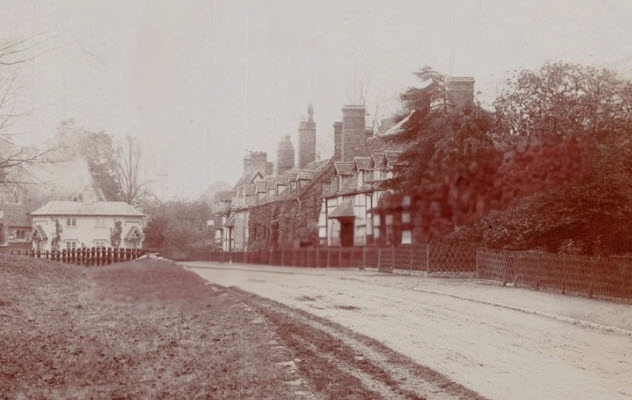
Located at the confluence of the River Arrow and the River Alne, the village of
Arrow
Arrow has served as a gateway to the ancient market town of
Alcester
For over two millennia its history is a transition from a Roman agricultural hinterland to a medieval religious estate, and finally to the grand seat of the Marquess of Hertford.
Roman Foundations (1st – 4th Century AD)
Strategic Location:
The village lies just south of where two vital Roman roads—Ryknild Street and the Salt Way—intersect.
Archaeological Finds:
Excavations in the surrounding Arrow Valley have uncovered Roman pottery, coins, and building materials, indicating the area served as a thriving agricultural and manufacturing hinterland for the walled town of Alcester.
Infrastructure:
Nearby finds include Roman timber buildings, hearths, and evidence of specialized industries like leather and metalworking that likely utilized the river’s resources.
Medieval Origins & The Domesday Book
Following the Roman withdrawal, the area saw settlement by the Anglo-Saxons.
Mercian Grant
In AD 710, Ceolred, King of Mercia, reportedly gave land in Arrow to Evesham Abbey.
Domesday Record (1086):
The village appears in the Domesday Book as Arve. It was held by Odo, Bishop of Bayeux (half-brother to William the Conqueror). The survey recorded 18 households, 30 acres of meadow, and a watermill valued at 6s 8d.
St James’ Church:
The village church of St James dates back to the 12th century, though much of its current structure reflects later 18th-century Gothic styles.
The Rise of Ragley Hall
Manorial History:
The manor passed through the de Camville and Rous families before being purchased in 1591 by Sir John Conway, whose descendants still reside there.
The Palladian Masterpiece:
The current Ragley Hall was designed in 1680 by Robert Hooke for the first Earl of Conway.
The Landscape:
In the mid-18th century, the legendary Lancelot ‘Capability’ Brown was commissioned to landscape the parkland, creating the lake and the sweeping views that define the village’s surroundings today.
Arrow Mill:
The mill mentioned in the Domesday Book continued to operate for nearly 900 years. By the 19th century, it was used for animal feed before being converted into a hotel and restaurant in 1962.
Cottage Industry:
In the 18th and 19th centuries, many Arrow villagers supplemented their income through needle making, a major local industry centered in the Arrow Valley.
The “Sham” Castle:
Look to the east and you will see Oversley Castle. Originally a 17th-century farmhouse, it was modified in the late 18th century to look like a ruined castle, serving as a decorative “eyecatcher” for the residents of Ragley Hall.