Stratford-upon-Avon is a compact market town on the River Avon in the heart of South Warwickshire, best known worldwide as the birthplace of William Shakespeare.
Cherished today for its quality of life, green spaces and strong community. For anyone thinking of living in South Warwickshire, Stratford offers a blend of deep history, vibrant culture and modern amenities within easy reach of countryside and major transport routes.
Early origins and market town beginnings
Stratford’s story begins long before Shakespeare, with a settlement that grew where an old route crossed a ford on the River Avon, a natural focus for trade and travel. In 1196 John de Coutances, Bishop of Worcester, laid out a planned town on a grid of wide, regular streets and long narrow burgage plots, many of which still shape the town centre today.
That same year King Richard I granted Stratford the right to hold a weekly market, transforming it from a rural village into a bustling medieval market town. The growing town became a place of tradesmen and merchants, united through institutions like the Guild of the Holy Cross, which combined religious, social and commercial roles and helped underpin local self-government.
Through the later Middle Ages Stratford prospered from trade in wool and agricultural produce, drawing in craftsmen, shopkeepers and professionals whose houses lined streets such as High Street, Wood Street and Sheep Street. Education mattered here too: a school was endowed next to the Guild Chapel in the 15th century, later re-founded as King Edward VI School in 1553, providing free grammar-school education to local boys.
Shakespeare’s town
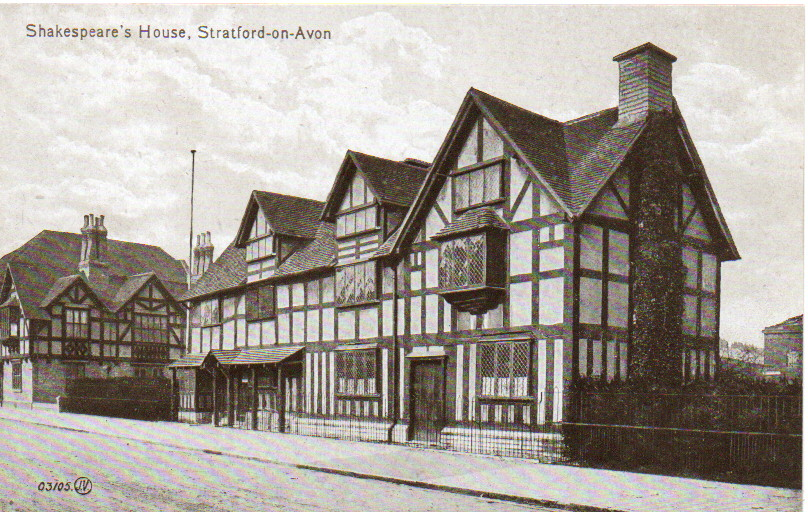
In the 16th century, Stratford’s most famous son, William Shakespeare, was born into this busy market town world. He entered the world in 1564 in a timber-framed house on Henley Street where his father, John Shakespeare, worked as a glover and local businessman, and where the family brought up eight children. The house doubled as a workplace, with living quarters and craft rooms under one roof, a pattern still visible in several surviving buildings in the town centre.
Although Shakespeare made his career in London, he retained strong ties to Stratford, buying New Place as his family home and eventually retiring there, with his story interwoven with local churches, schools and households. His presence and reputation helped fix Stratford in the national imagination, but for local people in his day it remained above all a working town focused on markets, craft trades and civic life.
Over the following centuries, visitors increasingly came to see the “Shakespeare town,” especially once his birthplace on Henley Street and Anne Hathaway’s Cottage at Shottery became recognised attractions. By the 18th and 19th centuries Stratford had become a place of literary pilgrimage, with inns, shops and river walks developing to serve the steady flow of travellers.
From industrial age to cultural centre
While Stratford never became a major factory town, the wider area participated in the Industrial Revolution through ironwork, printing and engineering, as well as continuing agricultural and cloth trades. Improvements in roads, canals and later the railway knitted Stratford more closely to Birmingham, Coventry, London and the wider Midlands, making it easier for people and goods to move in and out.
In the 20th century the town’s cultural role grew with the development of dedicated Shakespearean theatre, now represented by the Royal Shakespeare Theatre on the riverside. Festivals, performances and educational work drew audiences from across Britain and overseas, anchoring a local economy that combined tourism, retail, small businesses and professional services.
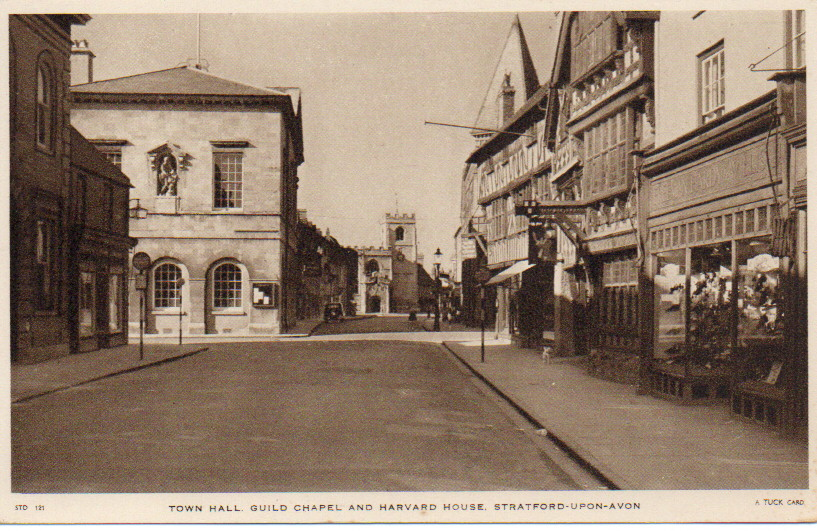
Despite its popularity with visitors, Stratford retained its character as a small market town with a distinct local identity, shaped by long-standing families, surrounding villages and the River Avon landscape. Many of the timber-framed buildings and medieval street patterns survived, giving residents a daily connection with the town’s long past.
Stratford today: a place to live
Today Stratford-upon-Avon is home to around 31,000 residents and welcomes roughly 2.7 million visitors a year, making it one of the UK’s best-known destinations outside London. The town offers a strong mix of amenities: theatres, independent shops, cafes, schools, medical facilities and riverside parks such as Bancroft Gardens, all set within walking distance of most central neighbourhoods.
Modern Stratford balances its historic core with ongoing investment in infrastructure and public spaces, with current plans focusing on making central streets like Bridge Street, High Street and Union Street more attractive for pedestrians and cyclists while respecting historic buildings. Popular residential areas include Shottery, Tiddington and nearby Welford-on-Avon, where village character combines with easy access to town services and schools.
Transport links are a key part of contemporary life here: residents benefit from direct trains to Birmingham and connections onwards to London, as well as proximity to the M40 for road travel across the Midlands and beyond. The surrounding Warwickshire countryside and close reach of the Cotswolds offer easy access to walking, cycling and rural villages, which appeals to families, professionals and retirees alike.
Living in South Warwickshire context
For anyone considering South Warwickshire, Stratford-upon-Avon acts as a cultural and service hub set among a network of smaller towns and villages. Residents can enjoy world-class theatre, a lively events calendar and a picturesque riverside setting, while still being only a short drive from quieter communities and open countryside.
The town’s long history has created a distinctive sense of place: medieval street patterns, Tudor and Georgian frontages and the ever-present Shakespeare associations sit alongside contemporary housing developments and modern schools. That combination of heritage, landscape and accessibility helps explain why Stratford and its surrounding area continue to attract people looking for a high quality of life in this part of Warwickshire.