Radway is a small but storied Warwickshire village, its quiet lanes shaped by over a thousand years of history, strong farming traditions, and the enduring presence of St Peter’s Church at its heart.
Today it remains a close‑knit rural community at the foot of Edge Hill, forever linked with the drama of the Civil War and the lives of the people who have called it home.
Origins and early history
Radway’s origins go back to Saxon times, when the “Church of Coventry” owned the land and the settlement grew beside a route whose red soil likely inspired the name “Radway”, from earlier forms such as Redweii or Radweis meaning “red way or road”. By the time of the Domesday Book in 1086, Radway was firmly established, with its lands later divided between Arbury Priory and Stoneleigh Abbey in the medieval period.
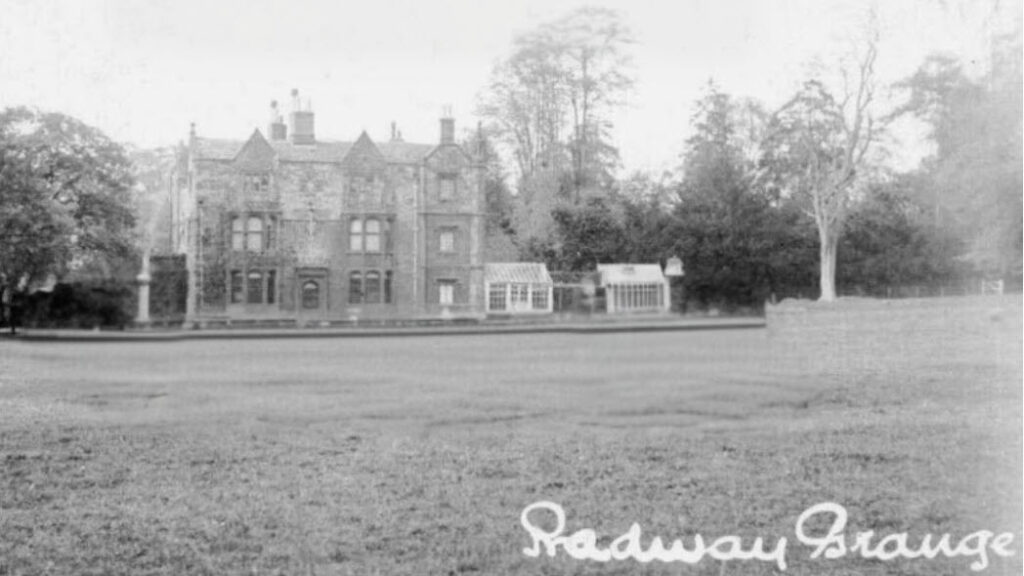
In the 12th century a monastic farm, Radway Grange, was created by Cistercian monks associated with Stoneleigh, anchoring the village in the wider ecclesiastical landscape of medieval Warwickshire. Over time, royal grants such as Edward I’s charter of “free warren” in 1284 underlined the manorial status of Radway, giving local lords the right to manage game over enclosed land.
Civil War and Edge Hill
Radway’s most famous historical moment came in October 1642, when the Battle of Edgehill – one of the first major clashes of the English Civil War – was fought in the fields around the village and neighbouring Ratley and Kineton. The landscape around Radway, with the steep rise of Edge Hill above the village, gave dramatic views of the opposing Royalist and Parliamentarian armies as they manoeuvred for advantage.
The human cost of that battle is still felt in Radway’s story through individuals such as Captain Henry Kingsmill, a Royalist officer who was killed at Edgehill and buried in the old churchyard; his effigy now rests inside the present St Peter’s Church as a reminder of those turbulent times. Local tradition even speaks of a Civil War soldier haunting the area, an echo of the fear and confusion that would have gripped villagers as fighting raged nearby.
Radway Grange and notable residents
Radway Grange, once a monastic farm, evolved into a significant country house and helped to shape village life and employment. In the 16th century it developed under the monks of Stoneleigh, and in the 18th century it was transformed in both architecture and landscape by the architect and gentleman‑designer Sanderson Miller, who was born and later died at Radway Grange.
Miller’s influence extended far beyond the village: commissions inspired by his work at Radway Grange included the Shire Hall in Warwick and the romantic, battlemented Castle Inn at the foot of Edge Hill. The Grange also has wider historical connections, counting among its past residents George Washington’s great‑grandfather, which links this quiet Warwickshire village to the early family story of the first president of the United States.
In the 18th century Radway Grange welcomed literary and political visitors; Henry Fielding is said to have written part of “Tom Jones” there, while William Pitt, later Earl of Chatham, planted trees in the grounds, adding another layer of national history to the local landscape. Later, Lieutenant Colonel Fiennes Sanderson Miller, a descendant of the architect, lived at The Grange; he survived the charge of the British Heavy Brigade at Waterloo and is buried with his wife in the old Radway church vault, tying the village to European events as well as English ones.
Village life and community
Physically, Radway is a spring‑line village, set where water emerges at the base of Edge Hill, and its layout and drainage reflect centuries of agricultural adaptation to the land. The settlement developed in two main parts separated by the parkland of Radway Grange, with the original focus at Westend, where the earliest church and graveyard served generations of villagers and where many early headstones still stand.
For much of its history, life in Radway revolved around farming, with grazed parkland, visible ridge‑and‑furrow fields, and working farms woven into the village itself. Enclosure in the 1750s reorganised the open fields into more formally bounded holdings, changing patterns of work and ownership but continuing the agricultural character that still shapes the surrounding countryside.
Radway has also had a strong Quaker presence: a Meeting House at what is now Oriel Cottage and a dedicated Quaker burial ground were in active use until around 1850, suggesting a nonconformist thread running alongside Anglican parish life. Nineteenth‑century benefactors such as Charles Chambers helped to provide a school and village hall, investing in education and social life; his ledger stone can still be seen in the old graveyard, a tangible record of local philanthropy.
St Peter’s Church old and new
A church has stood at Radway since medieval times, with evidence from excavations – including work by the television programme “Two Men in a Trench” in 2003 – suggesting an even earlier religious presence on the site. The medieval church at Westend, appropriated by Stoneleigh Abbey in 1291, was small but important, with its nave and chancel later extended to provide a grand family pew and burial vault for the Millers in the 18th and 19th centuries.
By the mid‑19th century the old church was considered too dilapidated, and the decision was taken to build a new parish church on a fresh site using stone from the original building. The present St Peter’s was designed by Gothic Revival architect Charles Buckeridge (often recorded as Buckridge) of Oxford and consecrated in 1866, its 150th anniversary celebrated by the village in 2016.
Inside the church, memorials from the earlier building were carefully re‑set, preserving a sense of continuity with Radway’s past. They include a 15th‑century stone effigy of a priest, the effigy of Civil War soldier Captain Henry Kingsmill, and a memorial to Sanderson Miller, ensuring that the spiritual and social history of the village remains visible to modern worshippers and visitors.
Just a short distance away, the old graveyard marks the site of the former church, with ledger stones, chest tombs, and the Miller vault offering insights into the families who shaped Radway over several centuries. Descriptions from the 18th and 19th centuries portray the old church as a neat, stuccoed building with a handsome Miller pew and, later, a tower and side aisles before it finally gave way to the Victorian structure that serves the parish today.
Radway today
By the 2011 census Radway’s population had fallen to just 238, underlining its character as a small rural parish rather than an expanding commuter settlement. Yet its setting at the foot of Edge Hill, the presence of Radway Grange and Castle Inn, and its deep historical layers ensure that the village continues to attract visitors interested in local history, architecture, and the story of the English Civil War.
Modern Radway balances everyday village life with a strong sense of heritage, supported by an active parish council, historical resources, and the continuing role of St Peter’s Church in community events and worship. From Saxon “red way” to Civil War battlefield, from monastic farm to Gothic Revival church, Radway’s past and present remain closely intertwined in the lives of the people who live there now and those who come to explore its story.