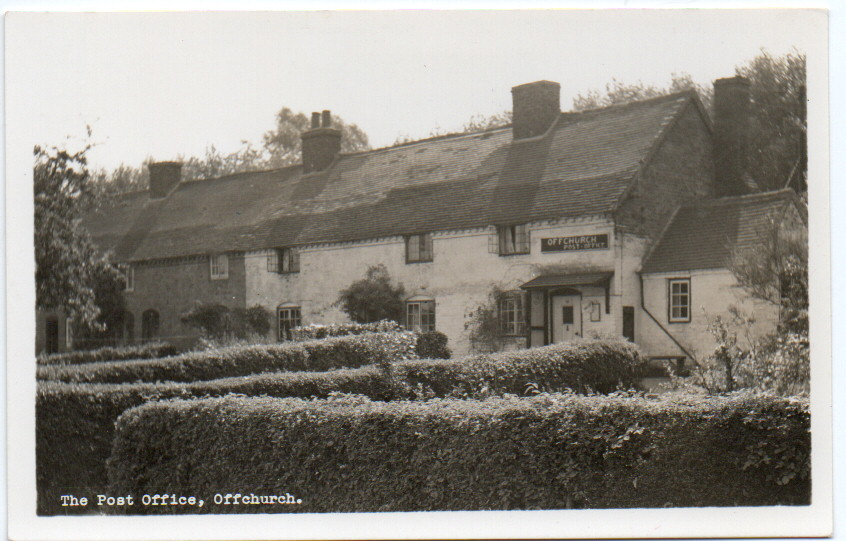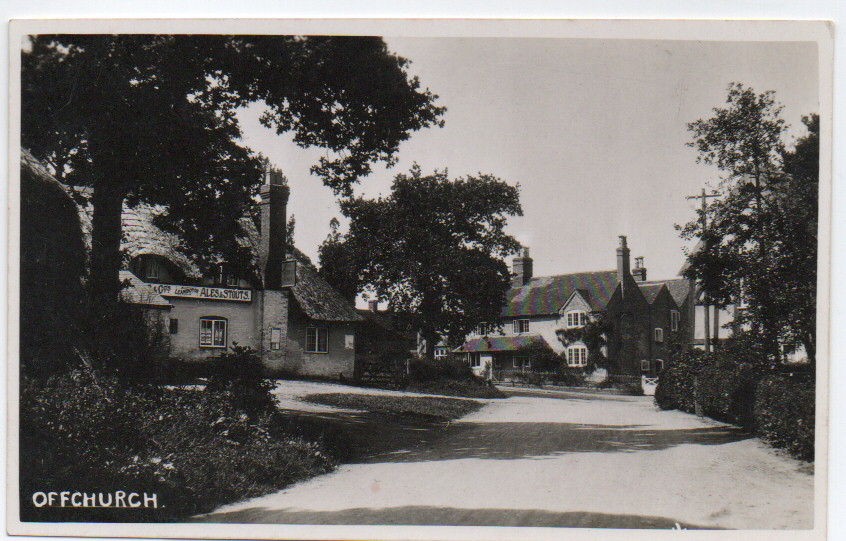
Offchurch is a small, river‑side village with a long memory, standing on a low hill above the River Leam about three miles east of Leamington Spa.
Origins and the village name
The name Offchurch is traditionally explained as “Offa’s church”, linking the place to Offa, king of Mercia in the late 8th century. Antiquaries such as Dugdale and Camden repeated the story that Offa had a royal residence here and that his son, the saintly Fremund, was buried at his father’s palace, with a church raised to mark the spot.
Modern scholars are more cautious, pointing out that there is no firm documentary proof for a royal palace on the site, although the position near major early routes like the Fosse Way and the Welsh Road would have made it a convenient stopping‑place. What is clear is that there was a church and Christian burial here before the Norman Conquest, as shown by traces of an Anglo‑Saxon cemetery found south of the church in the 19th century and early stonework reused in the present building.
Medieval Offchurch and church on the hill
Offchurch is not named in Domesday Book, but by the 13th century it appears as an estate of Coventry Priory, suggesting that the monks held it from quite an early date. From medieval times until the 16th‑century Dissolution, much of the manor’s income helped support the priory’s religious life and building work.
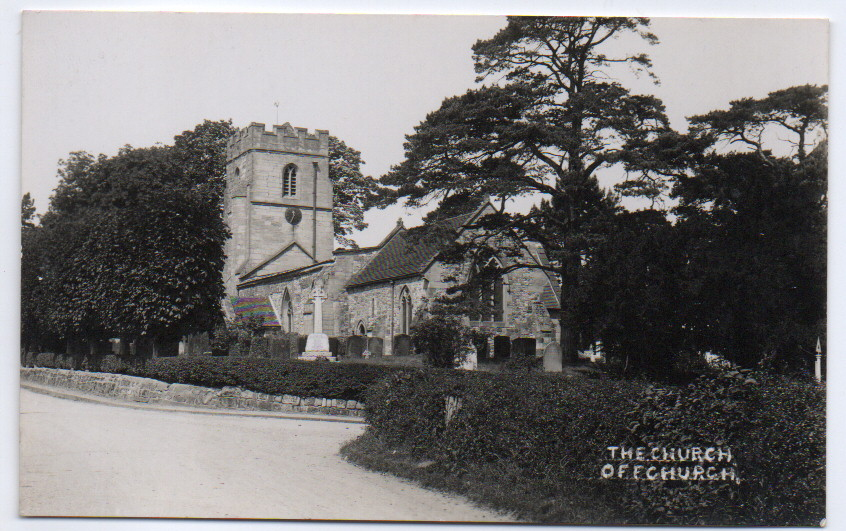
The parish church of St Gregory stands a little apart from the main street, high on the crest of the hill above the village and the river. Built of warm local red sandstone, it has Norman fabric from about 1110–1120, later medieval additions and a west tower, with details such as round‑arched openings and carved stone that reward a closer look. The churchyard, with its long views and old yews, has been the focus of worship, baptism, marriage and burial for the people of Offchurch for centuries.
Manor, estate and great house
After Henry VIII dissolved the monasteries, the Offchurch estate passed from the monks of Coventry into private hands. In 1542 it was granted to Sir Edmund Knightley, one of the king’s commissioners, and his descendants held Offchurch Bury—the manor house and surrounding lands—until the early 20th century.
Offchurch Bury, set south of the church near the river, became the local great house, its owners influencing both the landscape and village employment. Over time the grounds were reshaped into parkland, and estate farming, gamekeeping, domestic service and craft work all provided livelihoods for villagers as part of the traditional rural hierarchy that linked big house, farm and cottage.
Farming, river and early village life
For most of its history Offchurch was a small agricultural parish on good land beside the River Leam. Open fields and meadows along the river, together with pasture on slightly higher ground, supported a mixed farming economy of arable crops, cattle and sheep, worked by tenants and labourers under the manorial system.
Life for ordinary villagers was shaped by the seasons: ploughing and sowing, haymaking, lambing, harvest and winter hedging, punctuated by the church calendar of feasts and fasts. The river provided water, fishing and fertile hay meadows, but also occasional flooding; the lanes linked Offchurch to neighbouring settlements like Long Itchington and to markets in Warwick and Leamington, once those towns developed.
Nineteenth‑century change and connections
In the 19th century Offchurch remained small—described by Victorian gazetteers as a parish with a compact village rather than a large township—but it did not escape wider changes. Enclosure and agricultural “improvement” altered field patterns and labour needs, while the nearby Grand Union Canal (originally the Warwick and Napton sections) and the Leamington–Rugby railway line brought new transport corridors close to the parish.
The railway, whose old trackbed still runs near Offchurch, connected Leamington to Rugby and beyond, opening up markets and travel for farm produce and people. Canal and railway together meant that, although Offchurch kept its countryside feel, it was never as isolated as some Warwickshire hamlets; villagers could find work on the canal, railway or in nearby towns, as well as in fields and at the big house.
Twentieth century: from school to village hall
In population terms, Offchurch stayed small: the 2011 census recorded around 250 residents in the civil parish, not very different from many earlier estimates. But the pattern of village life changed as estate ownership shifted, transport improved and services were reorganised.
A good example is the village school, built in 1878 and enlarged around 1920 to take more children. By 1976 falling numbers and changing education policy led to its closure; villagers then bought the building and turned it into a village hall, which was extended and modernised in 2005 to become a flexible venue for weddings, parties, clubs and community events. As shops and other rural services declined, this hall became an increasingly important focal point for the social life of Offchurch.
Offchurch today: people and village life
Today Offchurch is still a distinct village, with its own civil parish, parish church and community identity, even though Leamington Spa lies only a few minutes away by road. The core amenities are the Church of England parish church of St Gregory, the redeveloped village hall and a well‑known country pub, The Stag at Offchurch, which draws both locals and visitors.
The disused railway trackbed, the Grand Union Canal and a network of footpaths make Offchurch a popular starting point for walks through the Leam valley, so weekend visitors share the lanes and footpaths with residents walking dogs or heading to the pub or church. Many villagers now work in Leamington, Warwick or further afield, but the scale of the place, the continuity of church and hall, and regular events keep a strong sense of neighbourliness and shared identity.
Offchurch’s story, from legendary royal church to modern commuter‑village with deep roots, gives you rich material to explore on your sub‑pages: Offa and the name, Offchurch Bury and the estate, the railway and canal, the old school and today’s hall, and the everyday experience of living on a Warwickshire river hill.
Would you like the next intro for another Leam valley village