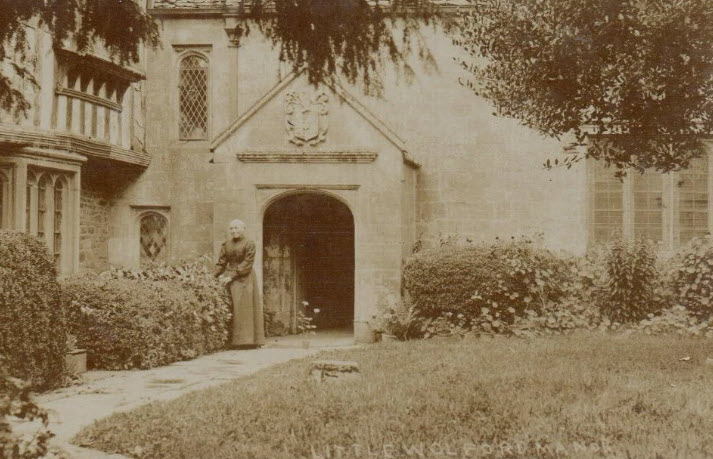
Little Wolford is a tiny, tucked‑away Warwickshire parish whose history is bound up with its 15th‑century manor house, a once‑larger medieval settlement, and its close ties to neighbouring Great Wolford and the parish church of St Michael and All Angels.
Today it remains a peaceful corner of the northern Cotswolds fringe, where old field patterns and historic buildings quietly recall centuries of rural life.
Setting and early origins
Little Wolford lies in the Stratford‑on‑Avon district of Warwickshire, just north of the Oxfordshire border and a short distance from places such as Shipston‑on‑Stour and Long Compton. Together with Great Wolford it forms “The Wolfords”, two small communities that share landscape, services and, ecclesiastically, the parish church at Great Wolford.
The settlement has deep roots. In the Domesday Book of 1086 it appears in various forms – Ulware, Ulwarda and Wolwarde – and by 1242 was recorded in Latin as Parva Wulleward, meaning “Little Wolford”. After the Norman Conquest it lay in the Hundred of Barcheston, with its lands divided into manors whose lords oversaw villagers, smallholders, ploughlands and a mill as part of the feudal economy.
Medieval village and later shrinkage
Medieval Little Wolford was once larger than the quiet hamlet seen today, and earthworks around the present houses preserve traces of what archaeologists call a “shrunken” village. House platforms and holloways (sunken trackways) show where earlier cottages and lanes once lay, dating from the medieval to post‑medieval period as the community expanded and then contracted again.
Like many small Midland villages, Little Wolford’s fortunes were tied to farming and changes in land use. Shifts in population, enclosure of open fields, and periods of economic difficulty all contributed to the reduction of the settlement to a smaller core of farms and cottages. The surrounding landscape of pastures, hedgerows and small woods still reflects that long agricultural history.
Little Wolford Manor and its people
At the centre of Little Wolford’s story is its manor house, a Grade II* listed building dating from the late 15th or early 16th century and widely admired for its surviving medieval and Tudor character. With its great hall, minstrels’ gallery, stone fireplaces and timber details, the manor gives a vivid sense of how a minor gentry family’s house might have looked in the later Middle Ages.
Over the centuries the manor passed through several hands, including, by the late 19th century, Juliana, Countess of Camperdown (Juliana Cavendish Philips), who was recorded as the principal landowner in 1896. At that time Little Wolford parish contained 1,312 acres and a population of 178 people in 1891, many of whom would have depended directly or indirectly on the estate for work.
In 1935 the architect Norman Jewson, associated with the Arts and Crafts movement and the Cotswold tradition, oversaw a sensitive restoration of Little Wolford Manor. His work preserved original features while making the house comfortable for modern living, helping to ensure this rare example of a small medieval manor survived into the 20th and 21st centuries.
Today the manor remains a private home set in landscaped grounds, with views over gardens and pastureland that frame it much as they would have done when it was the hub of the local manorial community. Descriptions emphasise its “time‑capsule” feel, where visitors stepping into the great hall can still sense the social world of former owners, tenants and servants.
Church, parish and spiritual life
Although Little Wolford once had a chapel, parish worship for The Wolfords has long been centred on St Michael and All Angels at Great Wolford, the parish church for the ecclesiastical parish of Wolford. All residents of Little Wolford retain a right of burial in St Michael’s churchyard, underlining the continuing religious and social ties between the two settlements.
St Michael’s itself, rebuilt in 1833 in limestone ashlar with a west tower and “short” buttressed chancel, stands as the key spiritual building for Little Wolford’s residents as well as those of Great Wolford. Restored in 1885 and reseated with open benches, it could accommodate around 300 people, which would have more than covered the combined populations of the parish’s small villages and farms.
Parish registers for baptisms, marriages and burials at Great Wolford go back to the mid‑17th century, providing a rich resource for tracing Little Wolford families, their occupations and their links to wider Warwickshire society. The church and its records therefore form a bridge between Little Wolford’s manorial past and the lives of today’s residents, whose important life events are still marked there.
Village life and character today
Modern Little Wolford remains a small rural parish, its scattered houses and farmsteads set among fields rather than gathered tightly like a typical village street. The absence of shops and pubs within the hamlet itself, and the reliance on nearby centres such as Shipston‑on‑Stour for services, help preserve its quiet, almost hidden character.
Agriculture continues to shape the landscape, with pastureland, hedges and small copses surrounding the settlement, while attractive walking routes connect Little Wolford to Great Wolford and other nearby Cotswold‑edge villages. For visitors, the main draw is the sense of stepping into an older, less hurried world, dominated by the presence of the manor and the subtle earthworks of the vanished parts of the village.
For those who live there, Little Wolford offers seclusion and continuity: a place where historic buildings remain in everyday use and where ties to the land and to the church at Great Wolford continue much as they have for generations. The story of this small Warwickshire parish is therefore one of survival in modesty – not a grand centre of power, but a quietly enduring fragment of England’s medieval countryside.