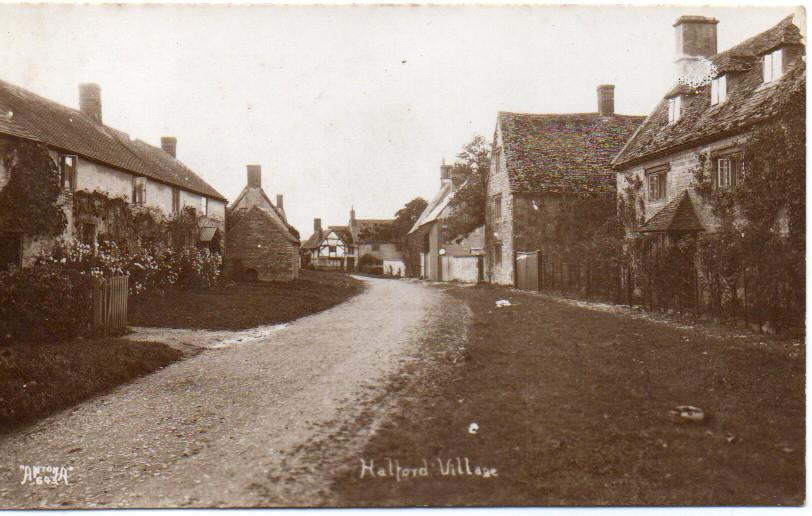
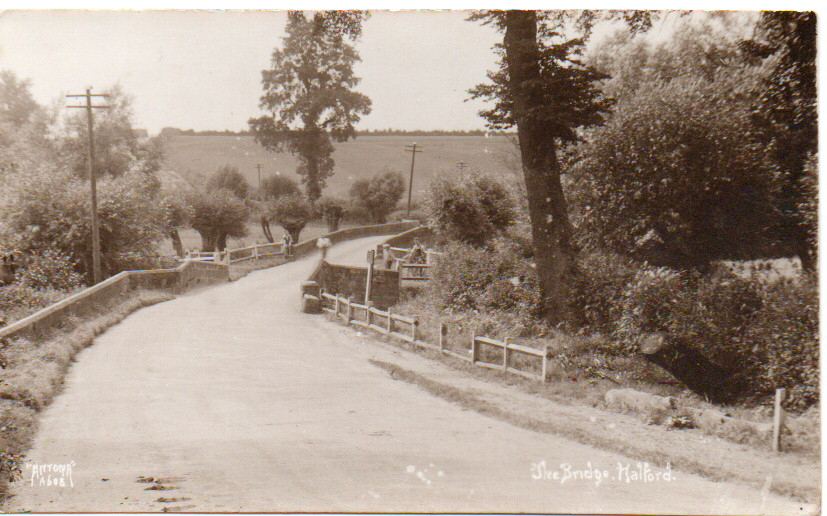
Halford is a small but historically rich Warwickshire village where the Roman Fosse Way meets the River Stour, its story shaped by a medieval castle site, centuries of farming life, and the long‑standing presence of St Mary’s Church at its centre.
Today it remains a close community of just over 340 people, quietly straddling an ancient route that has brought travellers through this landscape for nearly two millennia.
Setting and early development
Halford lies about three miles north of Shipston‑on‑Stour and eight miles north‑east of Moreton‑in‑Marsh, at the point where the Fosse Way Roman road (now the A429) crosses the River Stour. This strategic crossing has defined the village from its earliest days, making it both a river settlement and a staging point on one of Britain’s great long‑distance routes.
By the 19th century Halford parish covered around 1,010 acres, with a population of just over 300 people, most of them involved in agriculture and local trades. The 2011 census recorded 341 residents, and population figures into the 2020s show only modest change, underlining Halford’s enduring character as a small rural parish rather than a rapidly‑expanding commuter village.
Medieval Halford developed as a nucleated settlement around the river crossing and church, with farmsteads and cottages grouped along lanes that climbed away from the Stour. Archaeological records identify the remains of a medieval settlement in and around the present village, showing continuity of habitation from the 11th to the 16th century.
Halford Castle and the manor
Down by the river, near the crossing, lie the earthworks and buried remains of Halford Castle, a small motte‑and‑bailey structure typical of the Norman period. This timber‑and‑earthwork fortification is thought to have been the predecessor of the later manor house and would have allowed its lord to control the important route and ford or bridge over the Stour.
Although the castle itself has long vanished above ground, its motte and surrounding features still influence the shape of the riverside fields and are recognised in the local historic environment record. Over time, as conditions stabilised, Halford evolved from a defensive site into a manorial and agricultural community, with the castle function absorbed into a more comfortable house nearby.
St Mary’s Church and spiritual life
The parish church of St Mary has occupied a central place in Halford’s life for over 800 years and is one of the village’s most significant historic buildings. The first recorded rector was inducted at Easter 1150, only a few years after the stone church was built, and there may have been an earlier timber structure on the same site.
Architecturally, St Mary’s is a largely medieval building with later alterations: it has a nave with north porch, a south aisle, a chancel and a distinctive 13th‑century west tower that rises from the angle of the nave and aisle. The core of the nave dates from about 1150, as shown by the chancel arch and the north and south doorways, which retain Romanesque (Norman) features.
The chancel, probably 13th‑century in origin, has been much altered, especially during vigorous Victorian restorations in 1862 and 1883 that also saw the rebuilding of the south aisle and extensive window replacement. Despite these changes, the church retains some exceptional medieval elements, including a Norman tympanum over the north doorway, described as one of the best pieces of Norman sculpture in Warwickshire, and a Norman chancel arch with carved details.
Inside the church is a 14th‑century font with a 16th‑century wooden cover, still used for baptisms, linking present‑day families with centuries of parish life. The south chapel is dedicated to St Thomas of Canterbury (Thomas à Becket), and stained glass in the east window adds colour to what is otherwise a simple, rural interior.
St Mary’s is still very much in use, open daily for private prayer and hosting regular Sunday worship, weddings and funerals; its bells, some of them ancient, are rung for practice on Wednesday evenings and for services. Around the font hang antique fire hooks, a reminder of times when thatched roofs in the village could only be saved from spreading fire by pulling them apart from the ground.
Christianity and ecclesiastical links
Halford’s position on the Fosse Way has led to the suggestion that Christianity first came to this part of Warwickshire with Roman travellers moving along the road between Exeter and Lincoln. From the 13th century until 1918 the parish fell within the Diocese of Worcester, reflecting medieval diocesan boundaries that stretched across the region.
In the 20th century Halford’s church administration changed several times: between 1932 and 1974 it was united with neighbouring Newbold‑on‑Stour, before later becoming an independent parish again and sharing its priest‑in‑charge with Alderminster as part of a wider benefice. Today it belongs to the Stourdene group of churches, which collaborate to serve a cluster of rural communities along the Stour valley.
Village life, people and buildings
Historically, most Halford residents worked in agriculture, with fields and pastures lining the valley and rising land around the village. In the 19th‑century description by John Marius Wilson, Halford was noted as a parish with around 1,010 acres and 314 inhabitants, its “real property” value reflecting the productivity of farmland and local holdings.
The village plan still shows rows of cottages, farmhouses and small lanes that date back many generations, with the church slightly tucked away from the main road in a leafy churchyard that feels far removed from the busy A429 nearby. Many travellers along the Fosse Way remember Halford for the impressive Georgian Bell Inn, which fronts the main road and acts as a landmark, while never realising that a 12th‑century church lies just a short walk away.
Over the last century, Halford’s population has remained relatively stable, rising only slightly between the 2001, 2011 and 2021 censuses and in mid‑2020s estimates. This stability has helped preserve a village atmosphere in which newcomers and long‑established families share in community events centred on the church, the inn and local organisations.
Halford today
Modern Halford is a blend of deep history and everyday rural life: a place where a Norman tympanum and medieval tower overlook a congregation using electric light and modern hymn books, and where the Roman Fosse Way now carries cars instead of marching legions. The presence of Halford Castle’s earthworks, the centuries‑old church and the continuing pattern of houses by the river give the village a strong sense of continuity with its past.
For residents and visitors alike, Halford offers both convenience – as a crossroads on a major route – and a sense of retreat, especially in the quiet lanes that lead to St Mary’s and the green churchyard. It remains, in many ways, what it has been for centuries: a modest but enduring rural community anchored by its river crossing, its church and the memory of its medieval castle mound