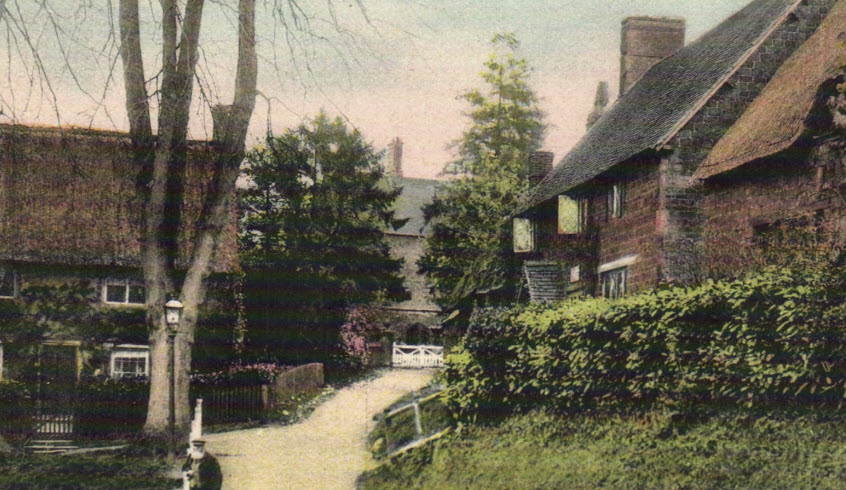
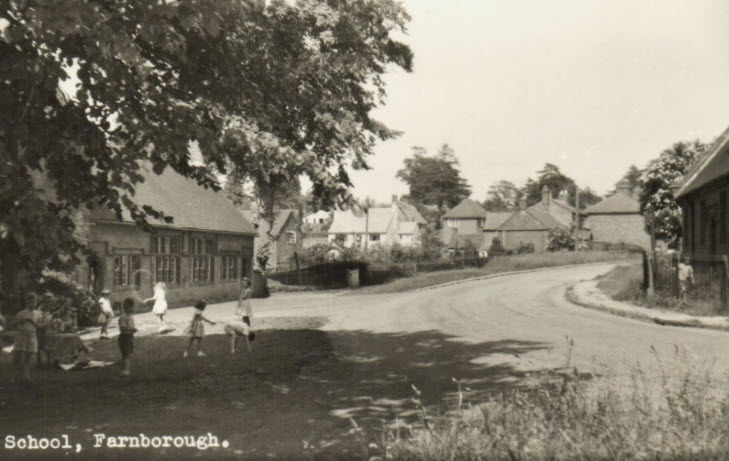
Farnborough is one of those hilltop Warwickshire villages you can almost miss on the map, yet once you’ve been there it stays with you.
Perched close to the Warwickshire, Oxfordshire border, it looks out over rolling countryside, its church tower and the honey‑coloured stone of Farnborough Hall giving it a quietly distinguished skyline. With a population of only a few hundred, it’s a place where history isn’t something in a book – it’s woven into the lanes, the field paths and the stories people still tell.
A village on the edge
The name itself, recorded in Domesday Book as “Fernberge”, hints at its setting – a “hill of ferns” rising above the surrounding landscape. Stand in the village today and you still get that sense of height and edge, with long views across to Oxfordshire and the familiar patchwork of pasture, hedgerows and arable land stretching away into the haze.
Being so close to the county boundary has always shaped Farnborough’s outlook. Post goes through Banbury, and the OX17 postcode anchors the village firmly in that orbit, even though it sits solidly in Warwickshire. For centuries, people here have looked in several directions at once: to Banbury for markets and services, to Southam and Kineton for local ties, and to the great house at their doorstep for work and patronage.
Lords, manors and a great house
If you trace Farnborough’s story back through the centuries, you keep meeting the same pattern: a small rural parish under the eye of a powerful manor. In the medieval period it belonged to the Say family, who held it from the reign of Richard I into the fourteenth century, placing this quiet village firmly inside the web of gentry estates that organised English countryside life.
Later came the Raleighs and, more enduringly, the Holbech family, who would leave the clearest mark. Their home, Farnborough Hall, stands just beyond the main street: a handsome, warm‑stone house that seems to grow out of its hill, rather than dominate it. Built in its present form in the seventeenth century and developed over time, it was once described as a “splendid modern edifice” – the sort of place that would have impressed visitors arriving up the drive in the nineteenth century.
But the hall is as much about landscape as it is about architecture. The grounds were laid out to make the most of the terrain: terraces and tree‑lined walks, deliberately framed views, and a carefully composed relationship with the fields and canal below. Today, under the care of the National Trust, those same walks are open to visitors, and for villagers the hall is both a backdrop and a neighbour, its opening days and events punctuating the year.
St Botolph’s: heart of the village
Every English village needs its centre of gravity, and in Farnborough that role belongs to St Botolph’s Church. Dedicated to a saint associated with travellers and boundaries, it feels appropriately placed on this county edge, a solid, time‑worn building surrounded by gravestones that read like a local directory of the last four centuries.
The parish registers begin in 1558, which means you can follow village life almost continuously from Elizabeth I to the present day: baptisms, marriages, burials, all written in neat ink by succession of rectors and curates. Certain surnames crop up again and again, suggesting families who worked the same farms or cottages for generations, weathering enclosure, agricultural change and war while their names continued to appear in the same old book.
In the nineteenth century the vicarage was modestly valued in the king’s books, which hints at a parish where the clergyman lived close to his flock and relied on local patronage. The Holbechs, as lords of the manor, presented to the living, endowed the parish school and helped support the fabric of church and community alike. On a Sunday the congregation would have included everyone from estate workers and farm labourers to the squire and his household – all under the same roof, singing the same hymns.
Work, land and everyday life
A nineteenth‑century directory paints a clear picture of Farnborough in its Victorian heyday: an “ancient parish” of around 1,855 to 1,953 acres, its population rising from the mid‑300s to just over 400 as the century progressed. Most people worked on the land or for the estate, with a few village trades – blacksmith, carpenter, shopkeeper – filling in the gaps. Stone quarries within the parish supplied material for many of the local buildings, giving the village its consistent, mellow character.
The outside world came closer with the arrival of the Oxford Canal along the parish boundary, and later the railway station at nearby Fenny Compton, linking Farnborough to Banbury, Oxford and Birmingham. For some villagers, that meant new work and easier travel; for others, it simply meant that goods and news arrived a little faster than they had by cart and carrier.
A chalybeate spring known as St Botolph’s Well added a touch of local curiosity, part medicinal folklore, part landmark on long walks. The parish also lay within the country of the Warwick hounds, so hunting would have been a familiar winter spectacle: red‑coated riders appearing over the fields, the sound of horns echoing off the hill.
Children, schooldays and family ties
By the mid‑1800s Farnborough could point to its own school, supported by around £40 a year – enough to keep a teacher in post and village children learning their letters. On weekdays, the ring of a hand‑bell would have brought boys and girls up the lane, some barefoot, some with slates under their arms, gathering in a simple classroom where the curriculum mixed reading, writing and arithmetic with a hefty dose of scripture.
Marriage entries tell us that Farnborough wasn’t an isolated island but part of a network of neighbouring parishes. Eighteenth‑century registers record links with Fenny Compton in particular, as local families married across parish boundaries and kinship ties stretched along the lanes. Over time, those webs of relation formed a quiet but resilient social fabric – everyone seemed to be someone’s cousin, godparent, aunt or in‑law.
Farnborough in the present day
Jump forward to the twenty‑first century and Farnborough is smaller than it was in Victorian times, with 265 residents recorded in the 2011 census. Like many rural communities, it has seen farm employment shrink and commuting grow, but the essential shape of life remains recognisable: church, hall, and a few focal points where people still meet.
St Botolph’s continues to hold regular services and life events, its porch and noticeboard advertising everything from harvest festivals to carol services. Nearby, the village hall – a more modern counterpart – hosts clubs, meetings and social evenings, while The Kitchen offers a place to eat, catch up and, as in any good village, exchange the latest news.
Farnborough Hall now ticks to the rhythm of the National Trust calendar: spring openings, summer visitors, specialist tours and volunteer days. For local people, this brings a gentle seasonal bustle – extra cars in the lane, walkers on the footpaths, a café busy on sunny weekends – but it also brings pride. The hall’s elegant rooms and carefully kept gardens are part of their backdrop, and many villagers have some connection to it, whether through work, volunteering or simply taking regular walks in its parkland.
A village that looks both ways
Ask someone why they live in Farnborough today and you’ll likely hear a familiar list: peace, views, community, and the sense of being somewhere with roots. You can drive to Banbury or Leamington for work, shopping or college, but come home to a place where the stars are still visible and the traffic thins to almost nothing after dark.
Yet this is not a museum village. Children still spill out of cars and school buses in the afternoon; dog walkers cross the same fields their grandparents did; parish meetings still debate practical issues like footpaths, planning and speeding in the lanes. The surnames on modern letterboxes might not all match the ones in the 1558 register, but the rhythm of life – marked by church bells, seasonal events and the changing colour of the fields – would be instantly recognisable to many of those earlier Farnborough residents.
In the end, that’s the charm of Farnborough: a place high on its fern‑covered hill, quietly carrying its past into the present, and inviting you – whether as visitor, resident or returning descendant – to become part of its ongoing story.