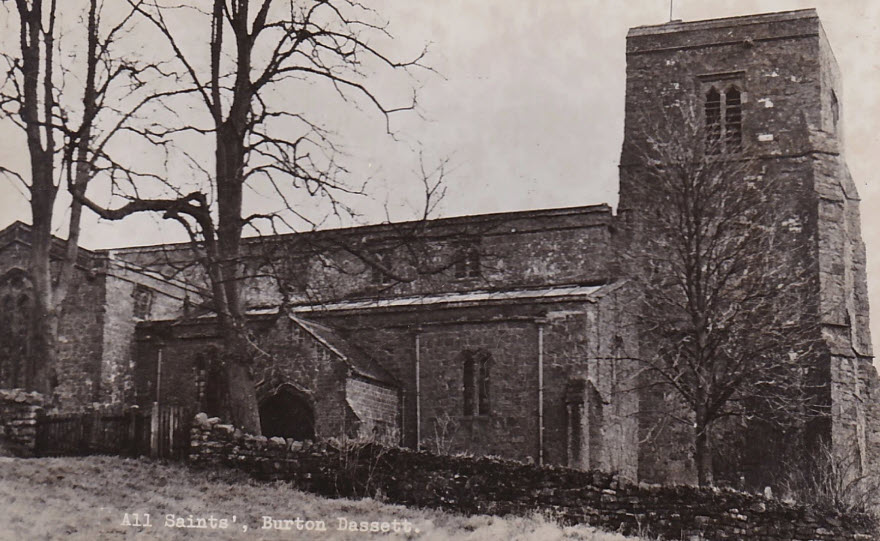
Burton Dassett is a parish of scattered hamlets and dramatic hills whose history, life, and people reflect the wider story of the south Warwickshire Feldon: from Anglo‑Saxon burial ground and medieval market town to deserted village and modern country park.
Early landscape and Anglo‑Saxon beginnings
The Burton Dassett Hills form a prominent ridge between Warwick and Banbury, with wide views that have always attracted human activity. Quarrying here in 1908 at Mount Pleasant exposed over 35 burials in an Anglo‑Saxon cemetery on the summit, the bodies laid with their feet “toward the dawn”, a striking reminder that this high ground was already a significant place over a thousand years ago.
Finds from that cemetery, including a dagger, first led local people to wonder whether the graves might date from the Civil War battle of Edgehill, before scholars recognised their much earlier, early medieval character. Together with traces of prehistoric and Romano‑British activity revealed in later excavations, the evidence shows that the parish landscape was cleared, farmed, and re‑colonised in waves long before the medieval villages took shape.
Medieval parish and Chipping Dassett
By the Middle Ages, Burton Dassett had become a large and complex parish, described by the antiquary Dugdale as “somewhat spacious”, with several separate settlements: Great Dassett, Little Dassett, Northend, Southend, Knightcote and Hardwick. In the 13th century the manorial lord, Bartholomew de Sudeley, secured a charter for a market at Southend in 1267, and this settlement grew into a flourishing small town known as Chipping Dassett – “Chipping” indicating its market status.
At its height in the early 14th century, the parish was so prosperous that it produced the third‑highest tax return in Warwickshire after Coventry and Warwick, suggesting a busy local economy of traders, craftsmen, and farmers serving the surrounding countryside. Earthwork remains and detailed excavations carried out ahead of the M40 construction have revealed more than 20 house plans, outbuildings, a smithy, and extensive animal bone and plant remains, giving an unusually clear picture of daily life in this medieval market community.
Lords, enclosure, and depopulation
The history of Burton Dassett is closely tied to the families who held the manor and shaped the fate of its people. Under Norman rule, Harold de Sudeley of Gloucestershire acquired most of the land in the parish, and members of the de Sudeley family remained influential here for about three centuries, their status reflected in the grand north and south doorways and chancel arch of All Saints Church.
Later, in the late 15th century, Sir Edward Belknap and John Heritage enclosed large areas of the parish for sheep farming. This process of enclosure and conversion to pasture led directly to the depopulation of Chipping Dassett, which was recorded as deserted by 1497; scattered farmsteads and surviving hamlets replaced the former market town, and the medieval village became what we now call a “shrunken” or deserted settlement. The land then passed into the hands of the Temple family, later of Stowe in Buckinghamshire, who regarded Burton Dassett as their ancestral home and left impressive tombs and memorials in the parish church.
All Saints Church and faith
All Saints Church stands on the slopes of Church Hill and is widely regarded as one of the finest churches in south Warwickshire. Its earliest fabric is medieval, with substantial 13th‑century work and a west tower added in the 14th century, embodying the parish’s prosperity at the time when Chipping Dassett was thriving. The great north and south doorways, dating from Harold de Sudeley’s time, and the later transitional Norman chancel arch are architectural reminders of the long link between local lords and the church.
Within the church are monuments to the Temple family, including the alabaster tomb of Peter Temple (died 1577) and his wife in the north transept, and a colourful heraldic memorial to his son John Temple, who went on to acquire Stowe. The church also bears traces of other powerful connections, such as the Throckmorton family of Coughton Court, and local legend claims that Oliver Cromwell once climbed the steeple while trying to find his way to the Battle of Edgehill. Today All Saints serves both the scattered hamlets of the parish and visitors to the country park, and with a Chapel of Ease at Northend it remains a focus of spiritual and community life.
Hills, beacon, and working lives
The Burton Dassett Hills, now best known as a country park, were once a working landscape of quarries, fields, and communications. A prominent stone beacon tower stands on the ridge, probably built or improved under Sir Edward Belknap in the late 15th or early 16th century as part of a chain of beacons for warning and signalling across the Midlands. Nearby there was once a windmill – a successor to earlier mills in the parish – which tradition dates to the 17th century; though the mill itself was later destroyed, its site and associated earthworks recall the importance of wind power for grinding local grain.
Ironstone quarrying has left clear marks in the form of old pits and workings around the hills, and it was this quarrying that exposed the Anglo‑Saxon cemetery in 1908. Medieval documents and later studies also show that the Knights Templar of Balsall once had villein tenants working land in the parish, and that sheep rearing, arable farming, and ironstone extraction each played a part in shaping villagers’ livelihoods at different periods. Until the Second World War parts of the parish remained sparsely settled, with isolated farms such as Owlington, Marlborough and Frog Hall, though in the 20th century a military base at Hardwick and the construction of the M40 added modern layers to the historic landscape.
Desertion, rediscovery, and country park
The story of Burton Dassett’s “lost” medieval village has attracted considerable archaeological and historical interest. Excavations undertaken ahead of the M40 road scheme in the late 1980s led to the detailed study published as “Burton Dassett Southend, Warwickshire – A Medieval Market Village”, which reconstructs the layout, buildings, crafts, and farming practices of Chipping Dassett and its decline after the Black Death and later depopulation. The deserted settlement survives today as earthworks in pasture just beyond the car parks and slopes used by visitors, meaning that many people walking the hills are unknowingly treading the streets of a vanished town.
In 1971 about 100 acres of the hills were opened as Burton Dassett Hills Country Park, securing public access to the ridges, beacon, quarry remains and views, with All Saints Church as a near neighbour. The park now attracts walkers, kite‑flyers, families, photographers and local residents looking for open space, and in doing so it has given a new community purpose to land once associated with enclosure, depopulation and extraction. Interpretation boards and publications help visitors appreciate the deep time of the site, from Anglo‑Saxon burials to medieval market town to 20th‑century motorway cutting across the old parish.
Burton Dassett today
Today Burton Dassett is officially a civil parish with a population of 1,322 at the 2011 census, including the village of Knightcote and the other hamlets which together form this dispersed community. Rather than a single nucleated village, life is spread between Northend, Knightcote, Little Dassett and scattered farms, with the church, country park and local pubs and halls acting as shared meeting points. The parish churches – All Saints on the hill and the Chapel of Ease in Northend – host services, concerts, and community events that connect long‑established families, commuters, and visitors.
Many modern residents work in nearby towns such as Warwick, Leamington, Banbury or at the British Motor Museum and industrial estates around Gaydon, while others farm or run tourism‑related businesses that benefit from the park’s steady flow of visitors. Yet despite these changes, the sense of place still rests strongly on the hills, the beacon, and the great church above the fields, all reminders that Burton Dassett’s people have been shaping, and shaped by, this ridge of high ground for many centuries.