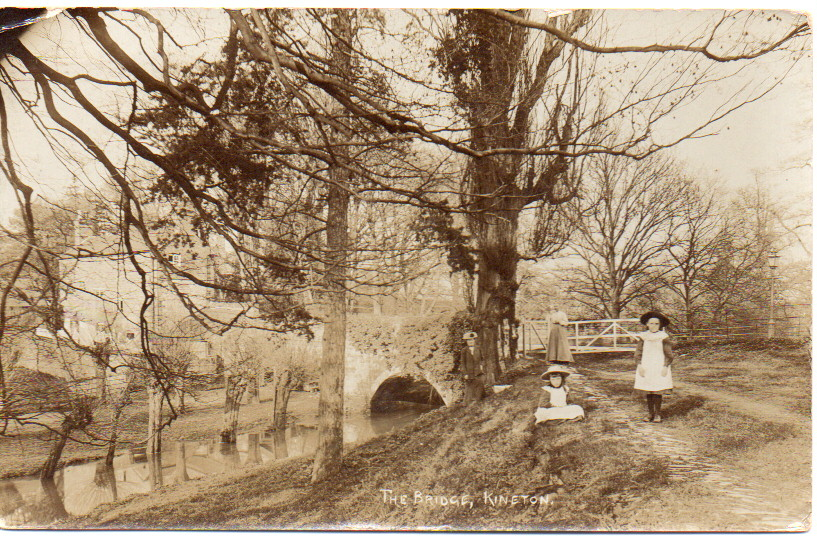
Early history and origins
First recorded in 969, when King Edgar granted land here to a counsellor, and later listed in the Domesday Book as “Kington”.
The village gave its name to the Kineton Hundred, the administrative area for much of south‑east Warwickshire in the medieval period.
Kineton developed early as a small planted borough with burgage plots, a market and artisan community, but is classed as a typical “medieval urban failure” after decline in the 15th–16th centuries.
Manors, castle and church
On the edge of the village, at the foot of Pittern Hill, are the earthworks of a motte‑and‑bailey known as King John’s Castle, probably the site of a Court Leet and the focus of the medieval manor.
The manor of Kineton Magna passed through royal and noble hands, including a grant by King John to Stephen Seagrave, who promoted the 13th‑century borough laid out with burgage plots.
St Peter’s Church occupies a long‑used site, with the present building begun in the 13th century and consecrated in 1315; only the fine medieval tower survives from that phase, the rest substantially remodelled and enlarged in the 18th and 19th centuries.
Settlement pattern and archaeology
Excavations have revealed a stone building of 12th–13th‑century date, metalled road surfaces, and a sequence of ditches from the 9th to 13th centuries, confirming dense activity in the high medieval period.
By the later 15th century the borough’s fortunes had declined, tenancies fell, and burgage tenure gave way to agricultural holdings, returning Kineton to a more typical large rural village.
The 1886 mapping shows a sizeable nucleated settlement with “bendy” back lanes, orchards, and plots bounded to the south by the River Dene, characteristic of a developed medieval and post‑medieval village core.
Later history and modern era
Kineton remained a local market centre until the 19th century; its formal market had ceased by about 1840, but it continued as an agricultural hub for the surrounding countryside.
In the Second World War the area was used as a transit camp for Polish and Czechoslovak forces, and RAF Gaydon (partly in Kineton parish) later served as a bomber and training base until 1977 before becoming home to the British Motor Museum and major automotive facilities.
The village today retains a late 17th‑century manor house, 19th‑century Methodist chapel, 20th‑century Roman Catholic church, and an 18th‑century stone windmill at Pittern Hill, alongside two pubs and a range of small shops.
Population and community today
The built‑up area of Kineton had a population of about 2,234 at the 2021 census, a gradual rise from 1,937 in 2001, with a slightly higher number of females than males and a sizeable 65+ age group.
Most residents are employed in nearby towns such as Banbury, Warwick and Stratford‑upon‑Avon, while the village itself remains largely agricultural with some light industry.
Kineton runs regular community events and festivals, including a summer music festival and a Christmas market, and supports an active local history group researching documents, oral history, archaeology and metal‑detecting finds from the parish and district.