Lighthorne: A Warwickshire Village Past and Present
Introduction
Lighthorne is a small stone-built village set in a secluded valley about six miles south of Leamington Spa in south-east Warwickshire, with a population of around 360 at the 2011 Census. Today it remains a close‑knit rural community, shaped by thousands of years of settlement, medieval manorial life, estate farming and more recent commuting links to nearby towns.
Ancient and Medieval Origins
Archaeological finds show that the Lighthorne area has been occupied for at least 4,000 years, with burials from the Neolithic, Iron Age, Roman and early Christian Anglian periods discovered within the parish. These remains, some of which are displayed at Warwick Museum, suggest a remarkably continuous pattern of settlement long before the village first appears in written records.
By the time of the Domesday Book in 1086, Lighthorne was already a sizeable community, recorded with about 36 households, which made it relatively large for the period. After the Norman Conquest the manor passed through several hands, eventually becoming part of the estates of Henry de Newburgh, the first Norman Earl of Warwick, and later the prominent local Mandeville and Verney families.
Church and Religious Life
A church at Lighthorne is recorded by the late 13th century, and by 1298 it was valued at 26 marks when the estate passed to Guy, the 10th Earl of Warwick. The medieval building appears to have been a simple structure of nave, chancel and a wooden bell‑tower, serving a small farming parish under the patronage of major landowners.
The present Church of St Laurence is built in a late‑13th‑century Gothic style, but most of what stands today dates from extensive Victorian rebuilding. The west tower was reconstructed in 1771 and the rest of the church was largely rebuilt in 1875–76 by architect John Gibson in rock‑faced limestone with ironstone dressings, incorporating earlier features such as 15th‑century window glass and older bells.
Manors, Farms and the Rural Landscape
For centuries Lighthorne was a classic estate village, its fields and farms organised around the manor. In the 19th century the Imperial Gazetteer described the parish as covering about 2,007 acres, with real property valued at £2,249 and a population of just under 400, most of the land and the manor being held by Lord Willoughby de Broke.
Historic buildings around the village reflect this long agricultural past: houses such as Bishop’s Farmhouse and Curacy Farm, as well as the old schoolhouse and the Antelope Inn, are thought to date from the post‑medieval and Georgian periods. Old barns at Church Hill Farm were still part of the working farm complex into the 20th century and were only converted into houses in 1989, illustrating how former agricultural premises have gradually been adapted for residential use.
Lighthorne Through War and Change
Despite its proximity to important Civil War sites such as Edge Hill, parish records suggest that Lighthorne itself saw little direct fighting or destruction during the 1640s, and there is no unusual cluster of burials or reports of major damage in the village accounts. The community seems to have broadly supported the Parliamentarian cause, reflecting wider patterns in parts of Warwickshire, but life in the parish continued to revolve around farming, the manor and the church.
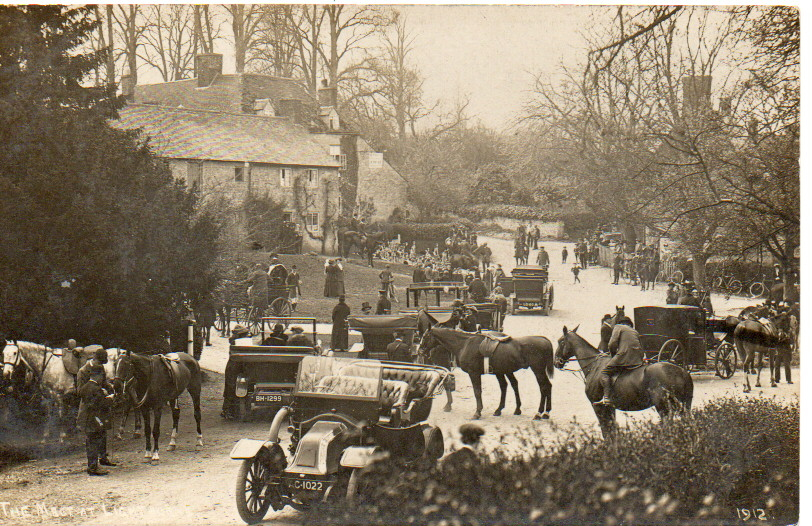
Later centuries brought enclosure, changes in farming practice and the gradual decline of purely estate‑based employment, but Lighthorne remained a rural parish well into the 20th century. Hunting was an important element of local life in Victorian times, with the parish lying within the country hunted by the Warwickshire hounds, and the surrounding lanes, spinneys and fields still retain much of that traditional landscape character.
The Village Community and Its People
In the 19th century Lighthorne’s 300–400 inhabitants were a mix of small farmers, agricultural labourers, domestic servants and craftsmen tied to the needs of the estate and the surrounding countryside. Names recorded in church registers from the mid‑16th century onwards show families that remained in the parish over many generations, contributing to a strong sense of local continuity.
By 2011 the population had fallen slightly to 361 residents, reflecting the modern pattern of smaller households and the shift from agricultural to mixed and commuting employment. Yet contemporary surveys still describe Lighthorne as a friendly, cohesive village where local organisations, clubs and informal neighbour networks help bind the community together.
Facilities, Amenities and Village Life Today
Although small, Lighthorne maintains a number of key amenities that support village life. The village hall is well used, hosting social events and activities, and a post office counter operates there several afternoons a week alongside a small visiting library service.
Residents value the village pub, sporting facilities and tennis club, and use nearby towns such as Leamington Spa, Warwick and Kineton for wider shopping and services. Modern assessments portray Lighthorne as an attractive place to live, with good access to transport links and schools, and a balance between rural tranquillity and proximity to major employment centres.
Housing and Development Pressures
Because of its size and setting, Lighthorne has faced careful debates about growth and housing. A 2013 housing needs survey found that residents were concerned about limited local facilities but also wary of large‑scale development, preferring small, proportionate schemes with an emphasis on affordable homes for rent and sensibly sized properties for purchase.
The same survey noted that the village is generally considered too small to sustain its own full‑time shop or extensive services, and many people prefer it to remain that way, using nearby towns for major needs. House prices in the wider area reflect the desirability of this part of rural Warwickshire, reinforcing pressures but also helping to preserve the low‑density, village‑scale character.
Lighthorne in the Twenty‑First Century
Today Lighthorne stands as a compact valley settlement that still clearly displays its medieval pattern and estate‑village feel while functioning as a modern rural community. Its ancient origins, rebuilt Victorian church, historic farms and converted barns sit alongside contemporary homes and commuting lifestyles, all framed by the rolling Warwickshire countryside