Stockton is one of those Warwickshire villages where industry and countryside sit side by side.
Two miles north‑east of Southam and just off the A426, it looks like a typical canal‑side community at first glance – but its story is bound up with blue lias limestone, cement, and a nineteenth‑century boom that turned a quiet farming settlement into a busy industrial village. Today, with a population of around 1,500 and a largely commuter feel, Stockton has swapped kilns and quarry wagons for dog‑walkers and cyclists, yet the traces of its working past are still written into the landscape.
From fenced enclosure to farming parish
The name “Stockton” first appears in records in 1272 and is usually translated as “a fenced enclosure”, suggesting an early settlement ringed by stock pens or protective boundaries. For centuries it was just that: a small agricultural village grouped around its church, with scattered farms working some 1,400 acres of land by the early modern period.
Medieval connections reach back to Walter de Somerville, a Norman landowner in the reign of Henry II who held land in Stockton and granted the church, with its supporting lands, to Hertford Priory. For the next six hundred years Stockton changed only slowly, its population still just 274 at the time of the 1801 census, and life revolving around farming, parish affairs and the quiet rhythms of rural Warwickshire.
Canal, limestone and an industrial awakening
Everything changed in 1792 with the discovery of “a rock of limestone” of exceptional quality in the fields around the village. Stockton sits on extensive deposits of blue lias clay and limestone – early Jurassic rock laid down 200 million years ago, famous for its marine fossils such as ammonites and ichthyosaurs – and the stone proved ideal for lime burning and cement manufacture.
The timing could not have been better. As cities and docks expanded in the nineteenth century, demand for waterproof, high‑quality cement soared. Stockton’s quarries and kilns responded, producing the renowned Blue Lias cement that found its way into projects as iconic as the Eddystone Lighthouse, the Houses of Parliament and the British Museum. The nearby Warwick–Napton section of the Grand Union Canal, built around 1800, became the industrial artery: coal came in by boat, while bricks, lime and cement went out along the waterway to markets across the country.
Locks, sidings and the Blue Lias
Canal and industry were literally intertwined around Stockton. In 1819 a private cut was agreed from the bottom of Stockton Locks to a quarry and lime works known as Kaye’s Arm, allowing barges to load directly at the works. The landscape around the bottom locks became a hive of activity: tramways, kilns, loading points and, later, a canal siding linked to the railway, all feeding the appetite of Victorian building sites.
On the road towards Long Itchington, by the canal, the Blue Lias pub still carries the name of the stone that made Stockton’s fortune, its title deeds going back to 1809. Even today, canal enthusiasts and local historians swap memories and photographs of the old limekilns by the locks and the remnants of the cement works unearthed when the canal siding was reinstated in 2017, a reminder of how densely industrial this rural corner once was.
Village streets and growing population
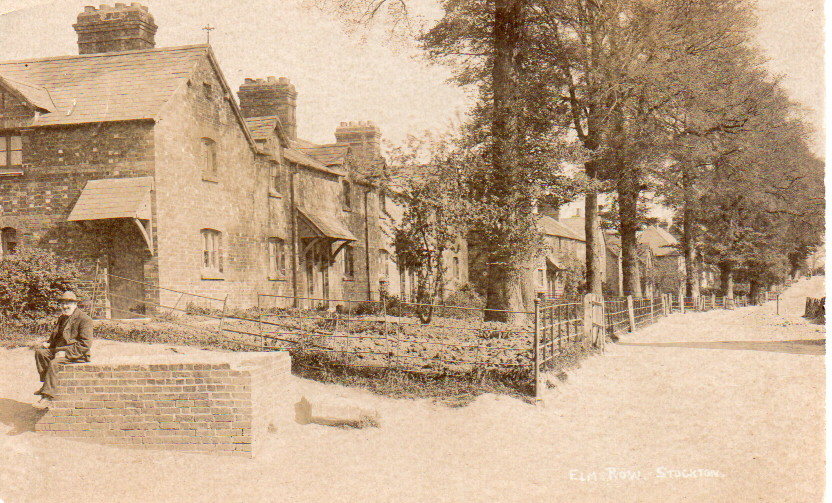
As the quarries and works expanded, Stockton’s population rose rapidly. From just 274 in 1801 it climbed to nearly a thousand by the end of the nineteenth century, transforming the scale and feel of the parish. Old maps and parish histories show how the village, originally clustered around the church, grew outward in the late 1800s with rows of workers’ housing and new streets built to accommodate cement and quarry families.
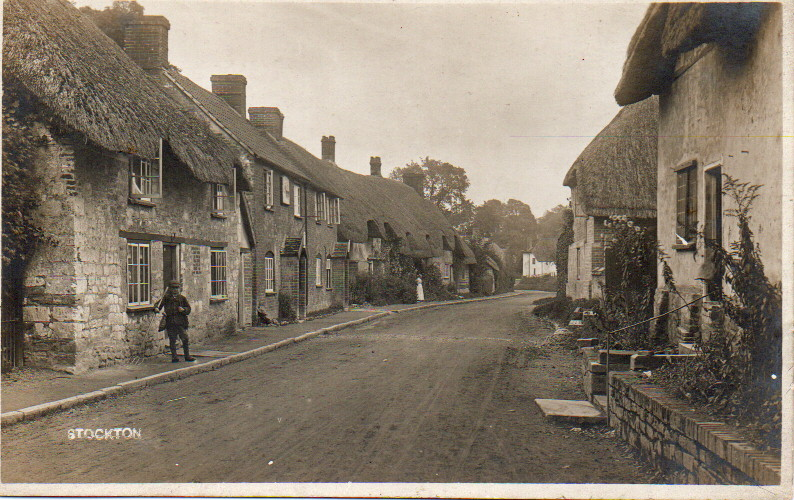
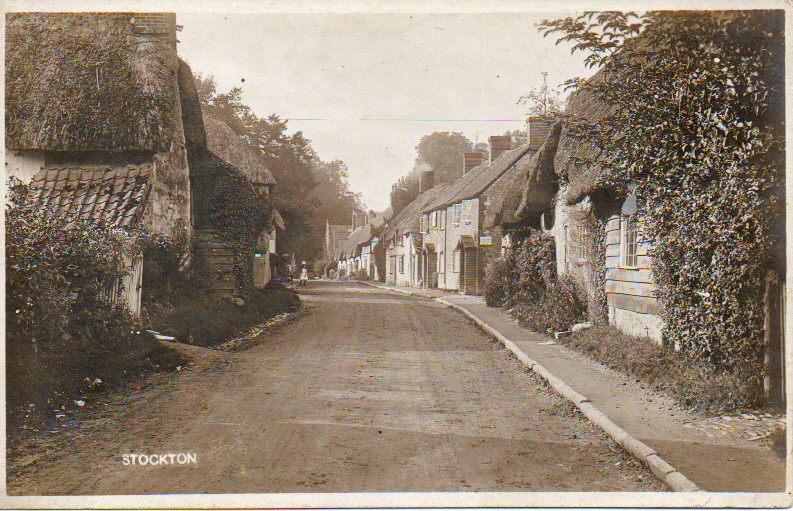
Even street names tell part of the story. Post Office Lane recalls the original post office housed in a fine double‑fronted building near the Barley Mow pub, while the current post office occupies what used to be the village bakery. Many of the older cottages and terraces that line Stockton’s High Street and side lanes today owe their existence to that industrial upswing; they were built to serve kilns, quarries and canal rather than purely agricultural needs.
Parish church and colourful clergy
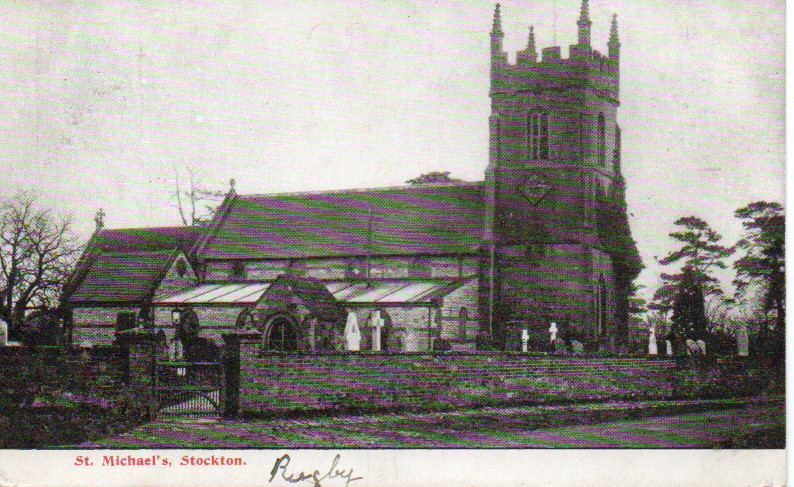
Through all this change, the parish church remained Stockton’s spiritual anchor. Walter de Somerville’s medieval gift of the church to Hertford Priory underlined its early importance, and for centuries it has recorded the life events of village families in its registers. Baptisms, marriages and burials chart the transition from a compact agrarian community to a bustling industrial village, with new surnames arriving alongside quarry and kiln jobs.
Local tradition remembers at least one colourful incumbent in the Edwardian period, nicknamed “Archdeacon” Colley – apparently a self‑styled title – whose personality left its own mark on parish life. Anecdotes like this, preserved in local histories, add a human dimension to Stockton’s story: behind the statistics of population and production were real characters animating its pulpit, pubs and pavements.
Fossils, quarries and hidden histories
The blue lias beds around Stockton are not just an economic resource but a geological treasure‑house. Quarries north and west of the village, some marked on the 1886 Ordnance Survey, have yielded rich fossil finds including a particularly impressive ichthyosaur skeleton now in museum care. For geologists and fossil‑hunters, the Stockton area forms part of a wider “Jurassic belt” stretching through Warwickshire and beyond.
Many of those quarries are now disused or landscaped, their industrial scars softened by scrub, grass and wildlife. Walkers following footpaths around the village may pass what look like innocuous hollows, ridges or flooded pits without realising they are standing above the very workings that powered Stockton’s nineteenth‑ and twentieth‑century boom.
Stockton today: commuter village with character
In the twenty‑first century, Stockton has taken on a new role. The kilns are silent and the cement works long closed; instead the village is now largely a commuter base, its residents travelling to work in Southam, Rugby, Leamington Spa, Coventry and beyond. Census and population estimates show a relatively stable but gently rising population: 1,391 residents in 2001, 1,347 in 2011 and 1,505 by 2021, with more recent estimates around 1,600 people in the built‑up area.
Despite this shift, Stockton has not lost its identity. The High Street still forms the spine of the settlement, with a pub or two, village shop and community facilities providing focal points for daily life. From school runs and dog walks to local clubs and events, the village operates at that human scale where people recognise each other in the street and news travels quickly, much as it did when kiln smoke still drifted above the roofs.
Canal, countryside and the feel of the place
One of Stockton’s biggest assets today is the blend of canal‑side atmosphere and easy access to open countryside. The Grand Union Canal, with its flight of locks nearby and the Blue Lias pub as a hub, draws in boaters, walkers and cyclists who often detour up into the village. Towpaths that once echoed to the clatter of horse‑drawn barges now offer quiet routes for weekend strolls, linking Stockton with neighbouring Long Itchington and beyond.
On a typical day you might see paddleboarders or narrowboats working through the locks, hikers tracing old quarry tracks and locals heading out along lanes that still carry a faint memory of coal carts and cement wagons. The air may be cleaner and the evenings quieter than in the industrial heyday, but Stockton’s character still rests on that unusual combination of Jurassic rock, canal‑side heritage and a village that has continually adapted to whatever work the wider world demanded of it