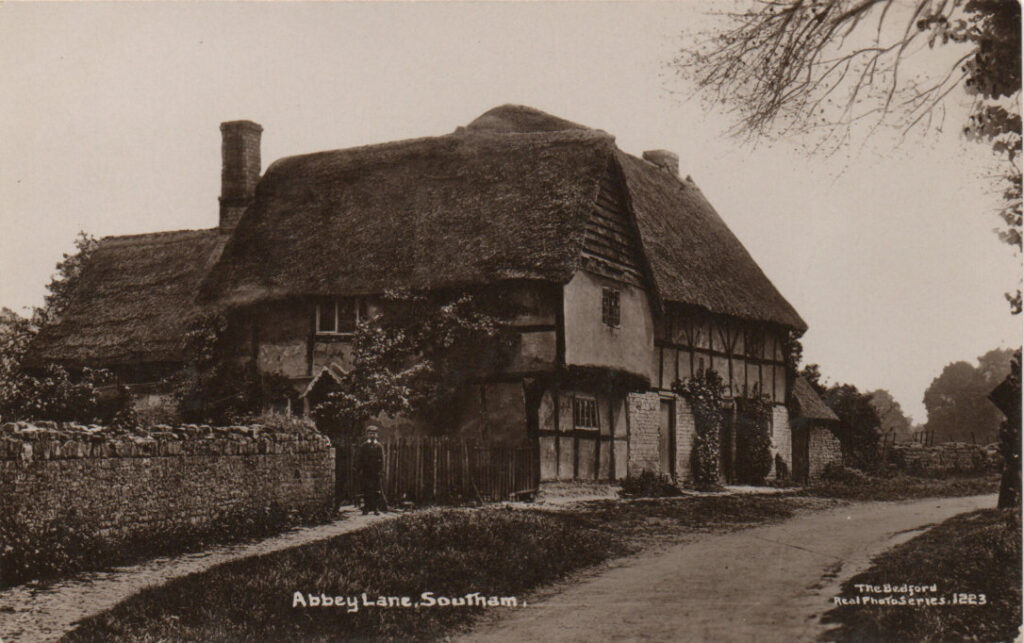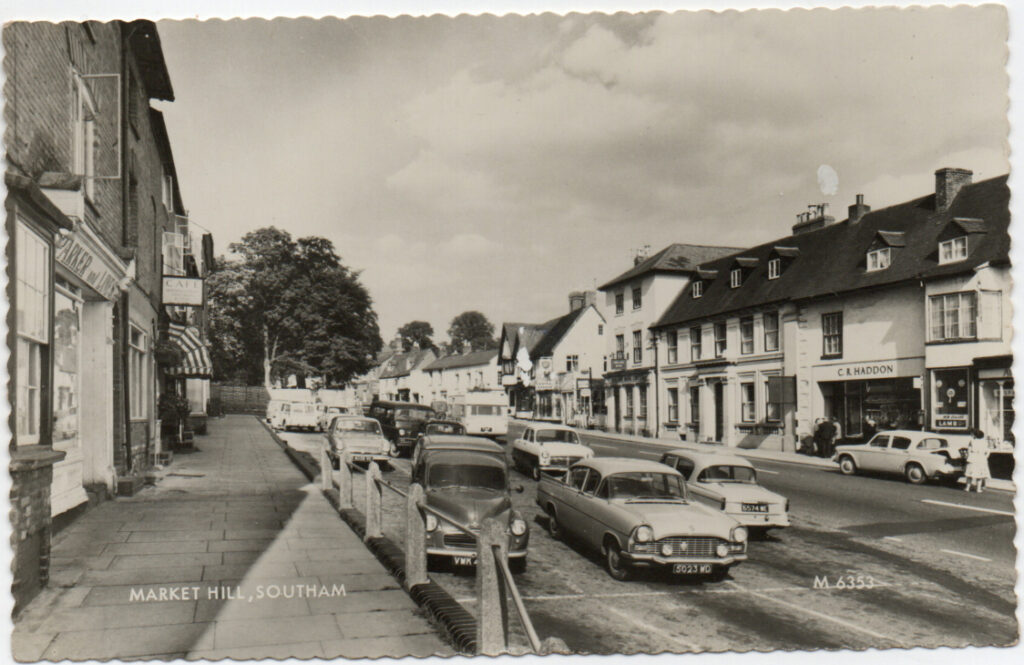
Southam feels like a place where England’s big stories and everyday life have always overlapped. Sitting on an ancient drovers’ route, about six and a half miles east‑south‑east of Leamington Spa, it’s grown from a “modest market town of a single street” into a busy small town of just over 8,000 people, while still keeping its historic core and strong sense of community. Markets, monks, monarchs, coaches and commuters have all left their mark on the streets you walk today.
From royal manor to market town
Southam begins its recorded life in elevated company. It was a royal manor until 998, when King Æthelred the Unready granted it to Earl Leofwine, and a generation later Leofwine’s son Leofric, Earl of Mercia, passed it to the newly founded Coventry Priory. The Domesday Book of 1086 records it as “Sucham”, a reminder that this patch of Warwickshire was already a valuable, worked landscape by the time Norman scribes came calling.
Its real lift‑off came from geography. Southam grew at the intersection of several important routes: the Coventry–Oxford road (now the A423), the Warwick–Northampton road via Daventry, and the old Welsh Road, an ancient drovers’ route that once saw herds of cattle tramping through from Wales to English markets. In 1227 the monks of Coventry Priory secured a market charter for their manor here, and Southam duly developed into a market town with weekly trading and, later, three annual fairs that drew buyers and sellers from much further afield.
Holy Well, manor house and church skyline
One of Southam’s oldest and most evocative landmarks lies just off the main streets: the Holy Well in the Stowe valley. First recorded in 998, it’s fed by a mineral spring and pours out through carved stone gargoyles into the river below. For centuries it was the town’s principal water supply and was reputed to cure eye complaints; today it’s a Grade II listed Scheduled Ancient Monument, restored in the 2000s with National Lottery funding so that visitors can once again enjoy its setting and story.
Back in the town centre, the 16th‑century manor house and the parish church of St James set the historic tone. The manor is a Grade II listed building, while St James’ is Grade I, its 14th‑century origins layered with later additions: a 15th‑century spire and rebuilt chancel, a 16th‑century clerestory and nave roof, and a west door that has welcomed worshippers for hundreds of years. Together they give Southam its distinctive skyline, instantly recognisable as you approach along the surrounding roads.
Coaches, fires and a town rebuilt
By the coaching era, Southam had become an important staging point on the route between Coventry and Oxford. Inns and hostelries clustered along the main street, ready to offer food, beer and fresh horses to travellers; several of those coaching inns still trade today, albeit with more parked cars than horse troughs out front.
Not everything you see now, though, is ancient. A devastating fire in 1741 destroyed much of the medieval town, and many of the present‑day buildings date from the rebuilding that followed. That gives Southam an interesting mix: medieval street pattern, coaching‑era frontages and later infill, with odd survivors hinting at what stood here before the flames.
Civil War skirmishes and wartime skies
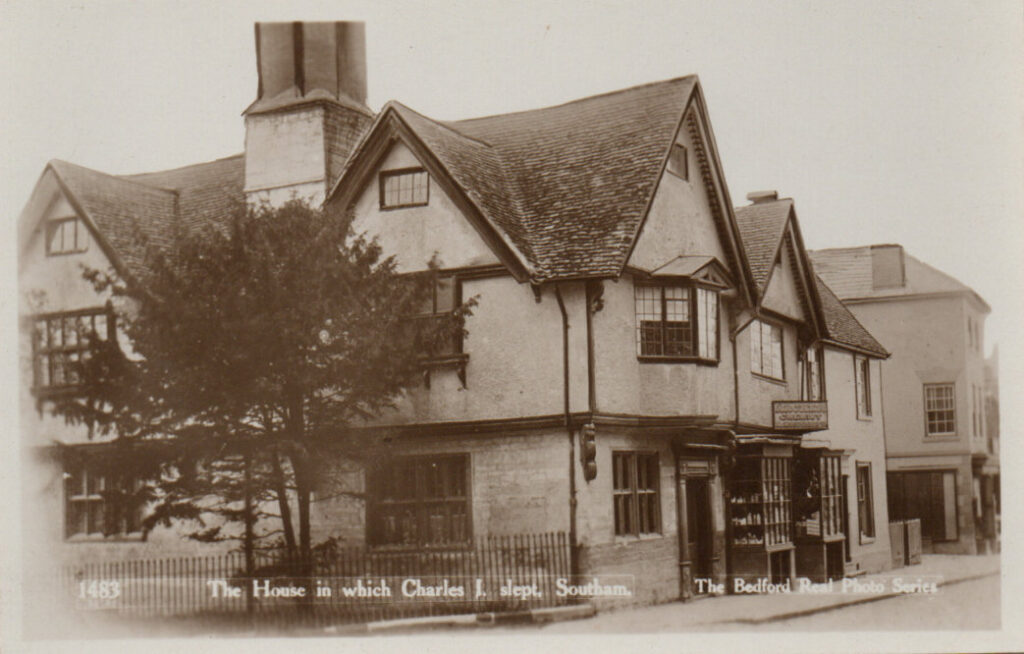
Southam also sits on a key chapter of national history. On the eve of the English Civil War, Charles I passed through the town but was met with a frosty reception – the townsfolk reportedly refused to ring the church bells in his honour. On 23 August 1642, the day after the King and Parliament formally went to war, a skirmish took place just outside Southam between Parliamentary forces under Lord Brooke and Royalists led by the Earl of Northampton. Locals still describe it as the first battle of the Civil Wars, and later that year Charles stayed at the Manor House on his way to the Battle of Edgehill, while in 1645 Oliver Cromwell and some 7,000 Parliamentary troops were quartered in the town.
Southam’s strategic role resurfaced in the twentieth century. RAF Southam, about a kilometre east of the town, opened in 1940 as a Second World War training base and relief landing ground before closing in 1944. Though the airfield is long gone, the memory of aircraft overhead and the war’s demands on local people forms part of the stories preserved by the town’s heritage groups.
Growing town, changing life
Population figures show just how much Southam has grown. From 935 residents in 1801, the town’s numbers climbed to 1,804 in 1911 and 2,212 by 1961; by 2001 the census recorded 6,509 people, rising to 8,114 in 2021. Today’s built‑up area is estimated at around 9,200 residents, with a broad age spread: healthy numbers of children and working‑age adults alongside a significant retired population.
This growth reflects Southam’s role as a modern service centre. It has primary and secondary schools, a range of shops, supermarkets, medical facilities and sports clubs, while its position near the M40 and within reach of Leamington, Rugby and Coventry makes it attractive to commuters. Yet despite housing estates and new business parks, the town still pivots around its older core – the church, market area and historic streets where independent traders, cafes and pubs hold their own.
Pubs, inns and a social hub
That coaching‑town legacy lives on most obviously in Southam’s pubs. Names like The Bowling Green echo centuries of hospitality; this particular inn can trace its origins back to around 1520 and was rebuilt in 1750 after a fire, remaining today a community‑minded pub with a focus on cask ales and home‑cooked food. Other historic inns dot the town centre, some with old coaching yards still evident behind modern car parks.
These are not just relics; they are social anchors. On a typical evening you might find quiz nights, live music, darts and pool teams and casual catch‑ups all happening within a few hundred yards of each other. Add in coffee shops, takeaway food, a growing events calendar and venues like the nearby Dallas Burston Polo Club, and you get a picture of a small town that punches above its weight for things to do.
Heritage, stories and local pride
If you want to dig beneath the surface, Southam gives you plenty of help. The Southam Heritage Collection, a local charity, curates photographs, documents, artefacts and oral histories that tell the town’s story from medieval times to the present. Exhibitions, talks and walking trails introduce visitors and residents alike to themes such as coaching days, Civil War, market life and the transformations brought by industry and modern transport.
Online, projects like “Southam Stories” and video introductions such as Southam Through the Ages offer accessible ways into this past, linking buildings you pass every day to events from a thousand years of history. The effect is to make the town feel layered; once you know what to look for, an ordinary stroll down the high street becomes a tour through time.
The feel of Southam today
Walk through Southam on a market day or a sunny Saturday and you can sense how those layers add up. There’s the hum of traffic on the A423, but also the quieter lanes where old stone and brick sit behind low walls and cottage gardens. In one direction you can be by the Holy Well in minutes, in another you’re passing playing fields, schools and modern housing that speak to the town’s role as a growing family centre.
What hasn’t changed is its function as a crossroads – not just of roads, but of people. Farmers, shopkeepers, commuters, schoolchildren and retirees all share the same pavements and pubs, much as drovers, monks and merchants did in earlier centuries. That blend of deep history and everyday usefulness is what gives Southam its character: a market town that has kept moving with the times without losing sight of where it began.