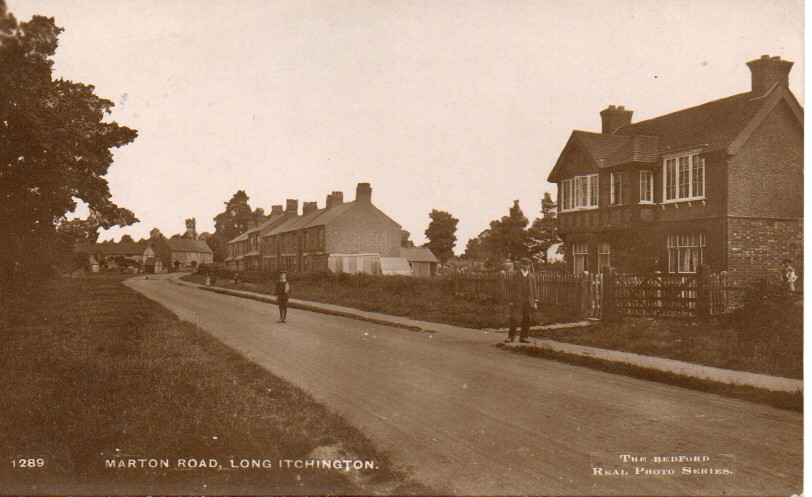
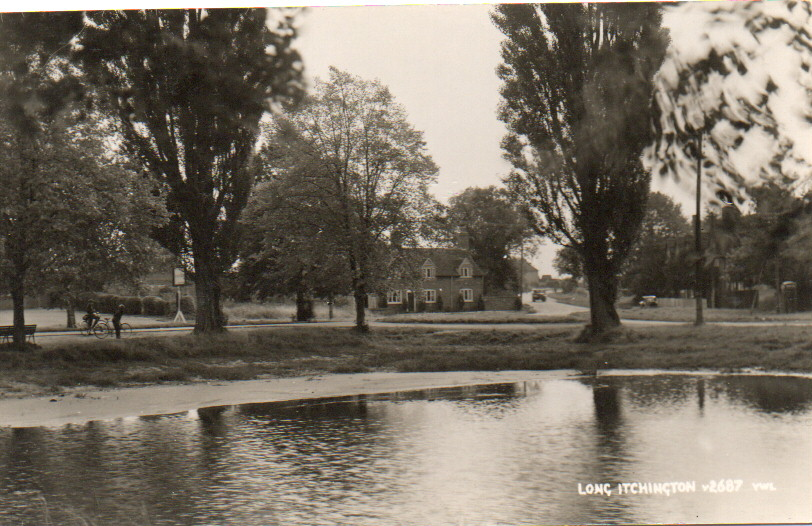
Long Itchington is a village that feels like a small country town in miniature: big enough to be lively, small enough that familiar faces still outnumber strangers.
With over 2,700 residents at the 2021 census, it is one of the larger villages in this part of Warwickshire, strung out along the old road north of Southam and framed by the River Itchen and the Grand Union Canal. It’s a place where pubs, ponds, canals and centuries of history all jostle together around a busy green.
A village of ponds and “long” history
The clue to the name lies in the landscape. The “Long” in Long Itchington reflects the elongated shape of the settlement, while “Itchington” comes from the River Itchen, which loops around the south and west of the village. Early records show the name evolving from Anglo‑Saxon forms such as Ycaentune and Icentone, reminding us that people have been naming and farming this place for over a thousand years.
Locals are justifiably proud of another landmark: the village pond, which is reputed to be the largest village pond in Warwickshire. On a fine day it’s the natural focus of the village – ducks on the water, benches around the edge, and the traffic easing past the green where so much of Long Itchington life seems to revolve.
From royal gifts to royal visits
Long Itchington’s written history goes back deep into the Anglo‑Saxon period. In the year 1001, King Æthelred the Unready granted 25 “manses” of land here to his thegn Clofig, with the charter describing local boundary points such as a “high oak in the middle of Wulluht Grove”. After the Norman Conquest, William the Conqueror gave the manor to Cristina, a great‑niece of Edward the Confessor, and her siblings were at the very heart of English and Scottish royal politics.
Centuries later, the village reappears in the pages of Tudor history. The manor was acquired by Robert Dudley, Earl of Leicester, favourite of Queen Elizabeth I, in the 1570s. A handsome 16th‑century timber‑framed house on the main road – now a Grade II listed Tudor building – became the setting for some of the Queen’s progresses, and local tradition holds that Elizabeth stayed here in 1572 and again in 1575 as a guest of Lady Anne Holbourne, Dudley’s daughter, on her way to Kenilworth.
Church, saints and village faith
At the spiritual heart of Long Itchington stands Holy Trinity Church, its origins in the twelfth century and later additions giving it a layered, lived‑in feel. The building is Grade II* listed, and as you walk up to it from the green you pass through a churchyard that tells its own story in dates and surnames, from Victorian stonemasons’ flourishes back to much earlier memorials.
The village also claims a connection with St Wulfstan, said to have been born here around 1012 before becoming Bishop of Worcester in 1062 and one of the last Anglo‑Saxon churchmen to retain office after the Norman Conquest. Alongside the parish church, a Congregational chapel speaks of later Nonconformist traditions, reflecting the religious variety that characterises many Warwickshire communities from the nineteenth century onwards.
Quarries, cement and a model village
Although today Long Itchington feels comfortably rural, industry has left its mark. To the south of the village, quarries and a large cement works once dominated the landscape, their chimneys standing out across the flatlands of eastern Warwickshire. Opposite the works a small “model village” was built to house cement workers – a planned cluster of homes with its own facilities, echoing similar industrial villages across the Midlands.
For much of the twentieth century, these quarries and the cement plant provided employment and a soundtrack of clanking machinery and shifting wagons. When the works eventually closed, the land and old railway line began to be reimagined: part of the former Weedon–Leamington Spa railway, once served by Southam and Long Itchington station, is now incorporated into a cycleway as part of the National Cycle Network, a neat example of how industrial corridors can be turned into green routes for walkers and cyclists.
Pubs, beer and community spirit
Ask almost anyone in the area what Long Itchington is famous for and pubs will be near the top of the list. For a village of its size, it has an extraordinary number of them: historically as many as seven or eight, with six or more still trading at any one time, each with its own character and loyal following. Names like The Green Man, The Duck on the Pond and The Two Boats (the latter tucked by the canal) have become familiar waypoints for walkers, cyclists and boaters as well as locals.
That pub culture has evolved into one of the village’s flagship events: the Long Itchington Beer Festival. Held annually around Easter, it’s a week‑long celebration of real ale and craft beer that draws enthusiasts from across Warwickshire and beyond. Each participating pub offers a changing range of ales and ciders, and the festival gives the village a carnival atmosphere – live music, tasting notes being compared on the green, and a steady stream of visitors discovering just how many hostelries one village can contain.
Amenities and everyday life today
Modern Long Itchington is well‑served for a rural community. Alongside the pubs, you’ll find a diner, a small independent shop, a Co‑op supermarket, a hairdresser, nursery and primary school, plus a park with a skate ramp and a busy community centre. For parents, the mix of school, play spaces and local clubs means children grow up with plenty of local friends and activities; for older residents, it offers a social life that doesn’t depend on getting in the car.
Population figures underline the village’s growth and appeal. From just over 2,000 residents at the 2001 and 2011 censuses, Long Itchington’s parish population rose to 2,704 by 2021, with a healthy spread of ages from young families to retirees. Many people commute to nearby towns such as Leamington Spa, Rugby or Coventry, but the village’s strong amenity base means day‑to‑day life – school runs, shopping, a quick drink, an evening class – often stays within the parish boundary.
People, memories and local pride
Long Itchington has produced its share of notable names, from St Wulfstan in the eleventh century to modern figures such as journalist Tom Hilditch. But what really defines the place is the density of local involvement: history groups, church congregations, sports teams, school associations and pub regulars all creating overlapping circles of friendship and activity.
The Long Itchington History Group meets monthly at the community centre from autumn to spring, organising talks, walks and research projects that dig into everything from medieval charters and Tudor progresses to the rise and fall of the cement works. Their work means that stories which might otherwise fade – of model village families, railway staff, quarrymen and farmers – remain part of the collective memory, informing the way residents see their village and its place in the wider county.
Canal, countryside and the “feel” of the place
For visitors, one of the pleasures of Long Itchington is how quickly you can step from bustle to quiet. The Grand Union Canal runs just to the south, and pubs like The Two Boats embrace the waterside setting with benches along the towpath and a constant procession of narrowboats, walkers and cyclists drifting past. Several waymarked routes – including the Long Itchington Loop – use the village as a starting point for circuits through fields and along the canal, bringing walkers back in time for lunch or an evening pint.
On a summer evening, the essence of Long Itchington might be captured in a handful of scenes: children on scooters around the green, anglers or dog‑walkers by the big pond, chatter spilling out of pub gardens, and the last light catching the stone of Holy Trinity’s tower. It’s a village that has grown and changed – from royal grants to cement dust and then to craft beer and cycleways – but one that has managed to hold onto a strong sense of itself in the process.