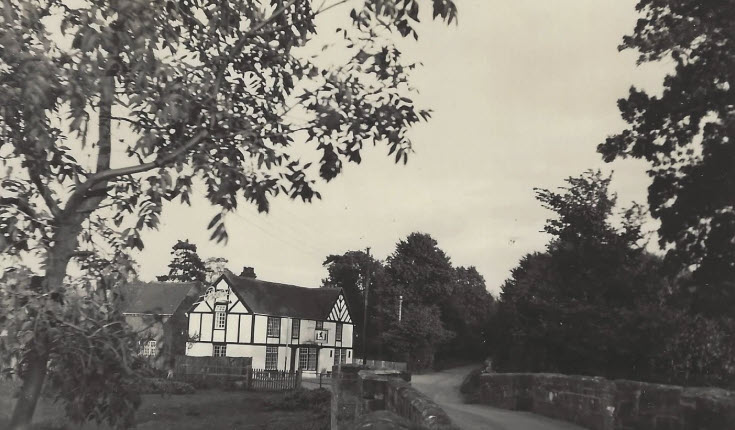
Hunningham is a small riverside village and parish on the River Leam, about three miles north‑east of Leamington Spa, with under 200 residents and a history traced in documents for a thousand years. Today it combines an ancient manor, a tight‑knit community and a well‑known country pub with a peaceful, rural setting that still feels distinctly Warwickshire.
Setting and early origins
Hunningham lies in the old Knightlow hundred of Warwickshire, within the modern Radford Semele ward, strung along a lane that drops to the River Leam and then rises gently towards Hunningham Hill. The river meadows, surrounding farmland and views towards the Leam valley give the village a classic lowland pastoral character, despite its nearness to Leamington and main road routes.
The village name comes from very early English roots, usually explained as “homestead or village of Huna’s people” or “hemmed‑in land of Huna’s people,” pointing to an Anglo‑Saxon founder and his kin group. That kind of name suggests a small, originally enclosed settlement carved out of woodland or rough ground along the Leam, probably sometime between the 7th and 9th centuries.
Domesday and the medieval manor
By 1086 Hunningham was well enough established to be recorded in Domesday Book as a settlement in Marton hundred. The survey notes 17 households, which places it among the smaller Warwickshire communities of the time but still a viable farming village with arable, meadow and associated labour.
The manor then belonged to William Fitz Corbucin, a major Norman landholder and likely sheriff of Warwickshire, with tenants Osmund and Chetel holding directly under him. Over the following centuries, the lordship passed through the hands of several prominent families: John de Hastings in the early 14th century, a nobleman who fought in the Scottish wars and served as governor of Kenilworth Castle; William Trussell, linked to the dramatic baronial politics that helped depose Edward II; and later the Cokesey and Beauchamp families.
In 1695 Thomas Leigh, 2nd Baron Leigh, bought the lordship, bringing Hunningham firmly into the orbit of the Stoneleigh Abbey estate. The Leigh family held the manor for nearly 300 years, and that long continuity helped preserve both the parish’s historic identity and its pattern of estate farming.
Village, church and everyday life
Throughout the Middle Ages and into the early modern period, most of Hunningham’s people made their living from the land along the Leam. Open fields, meadows and pastures supported a mixed economy of corn, hay, cattle and sheep, worked by villeins, free tenants and labourers under the manorial system and later under leasehold and freehold arrangements.
The parish church (now part of the same benefice as St Anne’s, Wappenbury) has long been the spiritual centre of the community, though the present building has seen many alterations and restorations. Sundays and feast days punctuated a year dominated by sowing, haymaking and harvest, while the river provided water, fishing and fertile grass, but also the occasional flood that left its mark on houses and fields near the banks.
Lords, documents and a thousand‑year record
One of Hunningham’s most striking features is the quality of its written record. The descent of the manor has been documented almost continuously from Domesday to the present day, with charters, court rolls and estate records charting who held the land and under what conditions.
These records show a procession of notable lords—Hastings, Trussell, Cokesey, Beauchamp, Leigh—whose wider roles in national politics intersect with the quiet life of a small Warwickshire parish. For local historians, that combination of grand names and intimate village scale makes Hunningham’s manorial history unusually rich material.
Nineteenth‑century change and Hunningham Hill
By the 19th century Hunningham was still a modest agricultural village, with population figures that rose and fell but rarely broke into the many hundreds. Enclosure and “improvement” reshaped the field pattern and concentrated holdings, while some inhabitants found work beyond the parish as canals, railways and nearby towns such as Leamington and Warwick grew.
Hunningham Hill, a small hamlet on higher ground within the parish, developed its own identity as scattered farms and cottages looked down over the Leam valley. The relationship between riverside village and hilltop settlement added variety to local life, with families and labour moving between the two according to work and housing.
Twentieth century to the present
In the 20th century Hunningham remained small in numbers—around 198 residents were recorded in 2005—but its way of life changed as mechanisation reduced farm labour needs and more people commuted to nearby towns. Estate ties loosened, cars became essential, and some older village roles disappeared or were transformed.
Yet several key institutions have helped hold the community together. The parish church continues to serve local worshippers, while the cricket club provides a focus for sport and socialising on summer evenings and weekends. Hunningham also has a local nature reserve, important for endangered species and a reminder that the Leam valley here is as much a wildlife corridor as a human one.
The Red Lion and village life today
At the heart of the village stands the Red Lion, a riverside pub that has long been a landmark for locals, walkers and visitors. Set beside the Leam with large windows and terraces looking over the water and fields, it was extensively refurbished after serious flooding in 2007 and now trades as a popular country pub and gastropub.
The Red Lion draws a mix of residents, day‑trippers, dog‑walkers and people from Leamington and beyond, making it one of the main informal meeting points for Hunningham’s community. Combined with social media groups that share local news, events and photographs, it helps give a small population an active and outward‑looking village life.
Hunningham today is still, in many ways, the “homestead by the Leam” of its name: a compact settlement of cottages and farmhouses, a manor with a thousand‑year paper trail, a cricket pitch and a much‑loved riverside pub, all sitting quietly within reach of modern Warwickshire’s towns and roads. For your deeper pages, you can now peel back layers on the manor’s lords, the Domesday entry, Hunningham Hill, the nature reserve and the story of the Red Lion to bring this small parish fully to life.