Harbury is a long‑lived hilltop village whose story runs from prehistoric settlers and Anglo‑Saxon farmers through quarrymen and railway navvies to today’s active, well‑connected community of more than 2,700 people.
Its landscape, buildings and village life still reflect this layered past, from Bronze Age finds and medieval ridge‑and‑furrow to Victorian pubs and a thriving 21st‑century social scene.
Early origins and name
People have lived around Harbury’s hill since at least the middle Bronze Age, with burials, pits and hearths dated to roughly 1500–1000 BC discovered north and north‑west of the modern village. The site’s height—about 400 feet above sea level and over 100 feet above the surrounding land—made it naturally defensible and attractive to early settlers.
Key prehistoric trackways ran along what are now Ivy Lane and Church Terrace, while the line of the later Warwick–London route marks the parish’s southern boundary, showing that Harbury has long stood near important lines of communication. The village name derives from “Hereburgh’s byrig”, meaning the fortified settlement of Hereburgh or Heber, thought to have been a female leader of an Iron Age tribe around 500 BC, neatly echoing the hilltop’s defensive character.
Saxon and medieval village
After the Romans withdrew, Anglo‑Saxon settlers moved into the area and likely introduced organised crop‑rotation and the ridge‑and‑furrow ploughing still visible in parts of the parish. By the Middle Ages Harbury was an established agricultural community, working open fields and common land before enclosure came late in the 18th century.
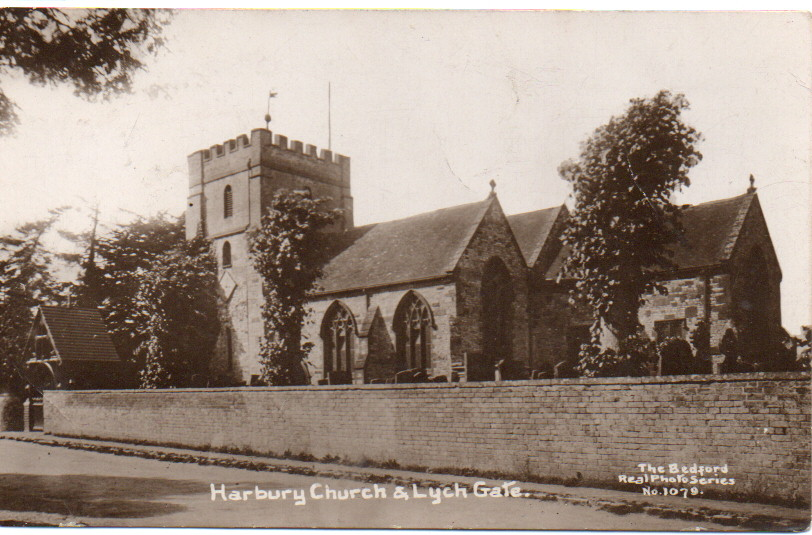
The parish church of All Saints, the oldest surviving building, dates from the late 13th century and acted as the spiritual and social centre for villagers for centuries. Medieval Harbury was a typical Midland village: a tight core of houses around church and lanes, a population dependent on the land, and a social structure shaped by lord of the manor, clergy and customary tenancies.
Buildings, ends and early institutions
Alongside the church, a number of Harbury houses survive from the 15th and 16th centuries, giving the village a rich stock of older domestic buildings. In 1611 Thomas Wagstaff, lord of the manor, endowed the Wagstaffe School; its limestone schoolhouse with mullioned windows and Tudor fireplaces still stands as an early 17th‑century landmark.
By the late 17th century two small outlying clusters, Binswood End and Temple End, formed in addition to the main concentration of dwellings near the church, but the overall size of the village changed little for generations. Poor soils on the lias limestone ridge meant farming was hard and few inhabitants could be called prosperous, giving rise later to the reputation of Harbury as a “poor village” or “Hungry Harbury.”
Quarrying and the coming of the railway
A major change came in the early 19th century with quarrying at the Bishops Bowl site and other local workings, exploiting lias limestone for cement and other uses. Many villagers became quarrymen, and new housing at nearby Deppers Bridge accommodated additional workers, knitting that hamlet into Harbury’s economic life.
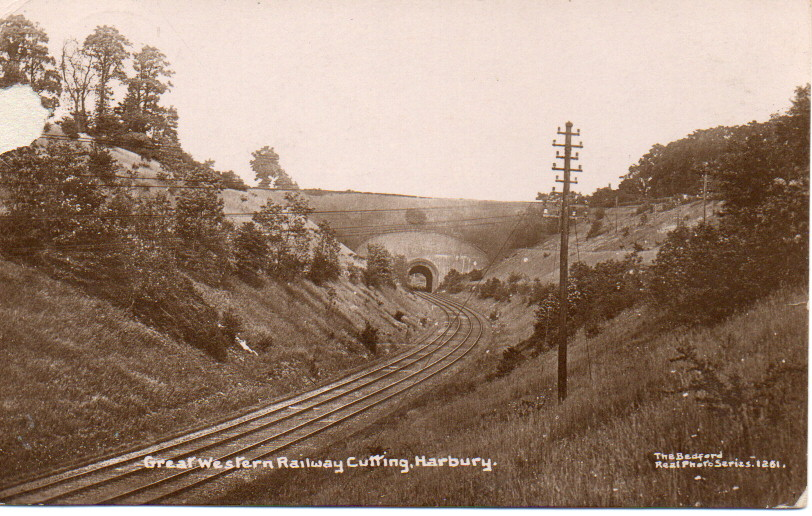
In 1847 the Great Western Railway’s Oxford–Birmingham line brought national transport directly to Harbury’s doorstep. The famous Harbury Cutting, just north of the village, was at the time the deepest man‑made cutting in the world, more than 100 feet deep and excavated largely by hand with pick, shovel and black‑powder blasting by gangs of navvies. The influx of railway workers fuelled demand for lodgings, food and drink, spurring the growth of local inns and services.
Victorian life and reputation
Life in Victorian Harbury centred on farming, quarrying and the new railway, but for many families it remained a struggle. The village acquired nicknames such as “poor village” and “Hungry Harbury”, reflecting both the thin soils and the hard living conditions of agricultural labourers and quarrymen adapting to industrial change.
Yet Victorian Harbury was also lively and sociable. The village co‑operative society, founded around 1863, and a cluster of public houses—many dating from the mid‑19th century, some in older buildings like The Shakespeare—served residents and navvies alike. Two nonconformist chapels, later converted to houses, and the Wight School, opened in 1856, added to the religious and educational life of the parish.
Growth in the 20th century
For centuries Harbury remained roughly the same size, but the 20th century transformed it into a much larger village. Between the World Wars council housing went up on the south side, and later private estates gradually filled the gaps between the historic centre and Binswood and Temple Ends, turning separate clusters into one continuous settlement.
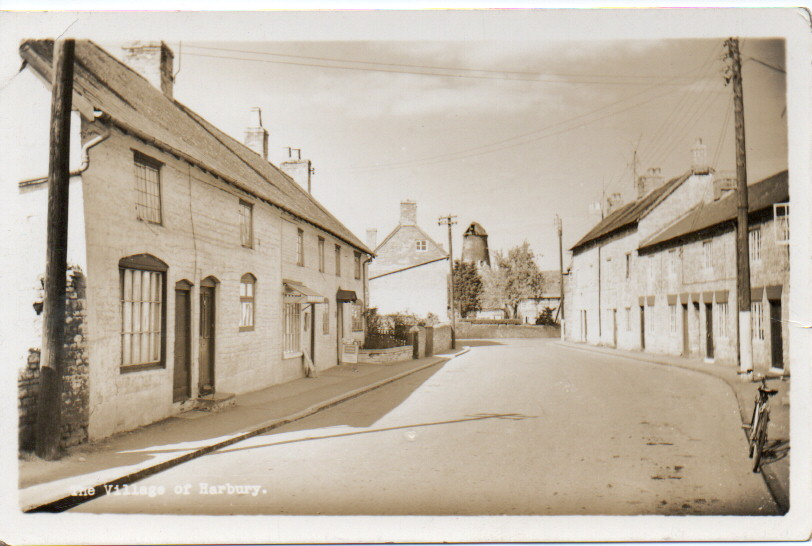
A new village hall opened in 1962 to serve the growing population, followed by a new school in 1967, reflecting rising numbers of children and the importance of community facilities. Further housebuilding in the 1960s and later decades produced the mixture of old cottages, Victorian terraces and post‑war estates that gives Harbury its varied, eclectic character today.
Village life and community today
Modern Harbury and Deppers Bridge together have a population of about 2,500–2,700, with census data showing a slight rise in recent years and a balanced age profile including many families and older residents. The village sits three miles west‑south‑west of Southam and about five miles south‑east of Royal Leamington Spa, making it a popular base for commuters as well as those working locally.
Despite its growth, Harbury has kept a strong sense of community. It supports a range of shops and services, a busy village hall, an active All Saints church community, a part‑time library with café, and a cluster of pubs and a club that remain social hubs much as their Victorian predecessors did. Local societies and hobby groups flourish, from sports clubs—including a well‑supported rugby club—to arts, music and special‑interest associations.
Memory, heritage and continuity
Villagers have taken conscious steps to preserve their history and identity. The Harbury Heritage Group, formed in 2010, cares for hundreds of old photographs and around 1,500 documents and news cuttings, and works with the school and wider community to keep stories of Harbury’s past alive.
Walking through Harbury today, you can trace that past in the fabric of the place: Bronze Age finds in local reports, the medieval church, the early schoolhouse, the iconic windmill without sails, quarry scars at Bishops Bowl, and the dramatic railway cutting that once echoed with pick and shovel. Above all, the people of Harbury—farmers, quarrymen, navvies, shopkeepers, commuters, volunteers and schoolchildren—have continually adapted to new circumstances while maintaining a village life that still feels distinct, neighbourly and deeply rooted in its Warwickshire hill